
There is a moment that a lot of people reach and very few talk about. You notice how something works. Then you notice how the next thing works. And at some point you realise you cannot stop noticing.
The advert is not telling you about a product. It is telling you what is wrong with you. The film is not a story so much as a sequence of beats tested on an audience. The news is not a window. It is a selection. The offer at the till, the countdown on the booking site, the notification that arrives just as you were about to put the phone down: none of it is accidental. Somebody designed it, measured it and was paid for it.
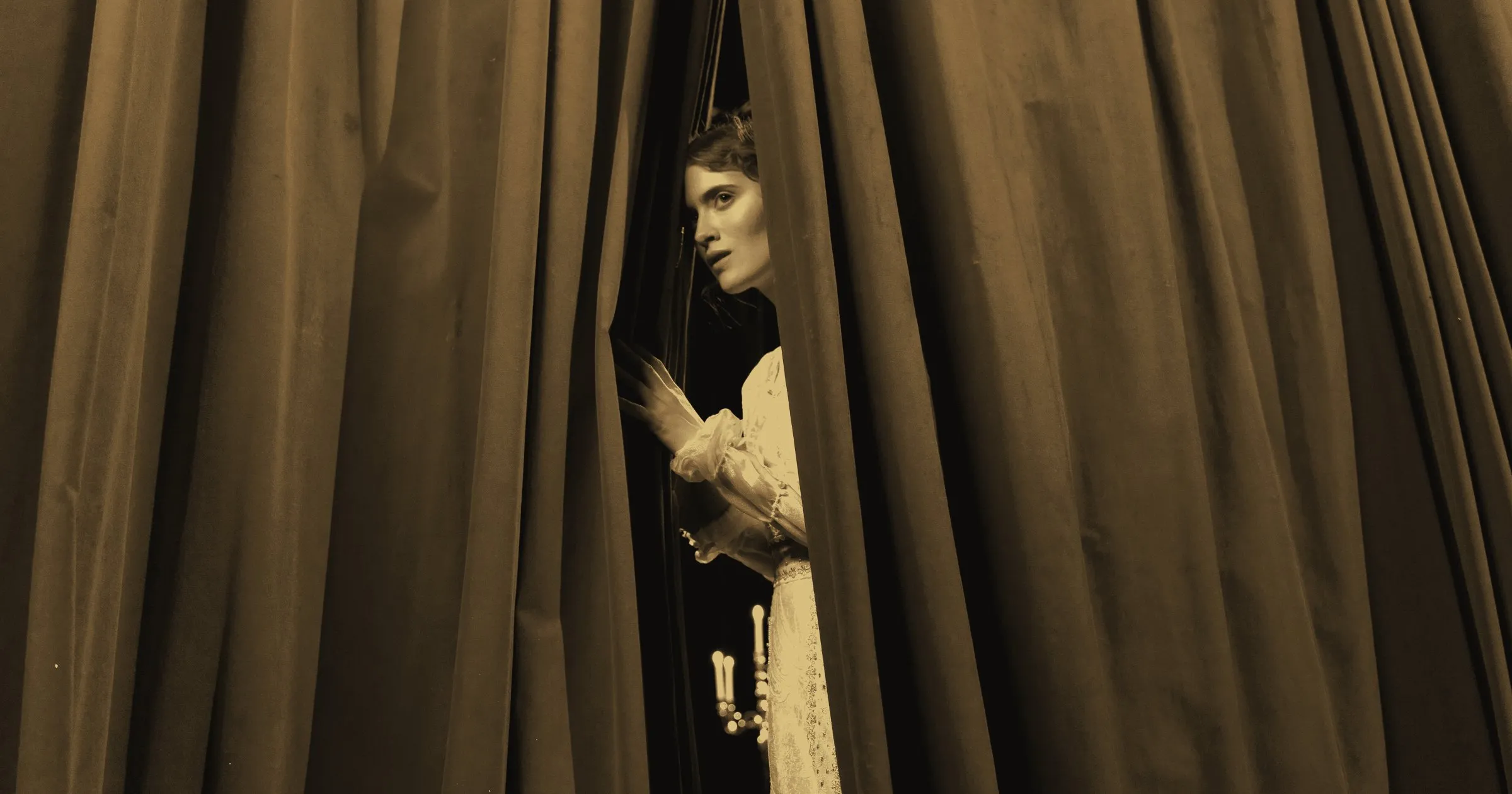
Once you have seen behind one curtain, you start checking behind all of them. And behind most of them there is a mechanism.
Why nothing tastes the same
The first cost is pleasure.
Things that used to be simply enjoyable become transactions you can see the edges of. A meal out is also a margin. A holiday is also a funnel of upgrades. A football match is also a broadcast deal, a betting sponsor and a shirt that changes every season so that you will buy it again. You can still enjoy them. But part of you is standing to one side, watching the machinery turn, and it is hard to lose yourself in something while you are also auditing it.
People describe this as becoming “conscious”, or “waking up”, and it does feel like that. It feels like the lights have come on in a room you thought was dark. The trouble is that the room is not more beautiful with the lights on. It is just more visible.
So you go looking for the old feeling, and you cannot find it. The things that used to fill you now feel thin. Not because they changed, but because you can see exactly how thin they always were.
Films, news and trends
Films are usually the first to go. You start to see the structure under the story: the inciting incident at ten minutes, the low point three-quarters of the way through, the swelling music telling you when to feel something. You can guess the twist because you know where the twist has to go. The sequel exists because the first one made money, not because there was more to say. The hero’s politics are the studio’s best guess at the audience’s mood that year. You sit in the dark and, instead of being carried along, you find yourself predicting the next scene and being right.
The news goes next, and it goes harder. Once you see that it is selected, you see what it is selected for: attention, and the cheapest way to hold attention is fear and anger. Every day is a crisis, and every crisis is replaced by the next one before anything is resolved. The same story is told in the same words by every outlet within the hour. Nothing is followed up. You stop feeling informed and start feeling handled, and it is depressing in a very particular way, because the world is not actually ending every morning. It is just being sold to you as if it were.
Then you start to see trends before they arrive. The phrase everyone will be saying next month. The product every feed is about to discover at once. The outrage that will run for exactly a week. The opinion that will suddenly be the only acceptable one, and then quietly stop being mentioned. Once you have watched a few of these rise and fall, you can feel the next one coming, and you can see the people around you pick it up on cue. It is a strange kind of foresight. It does not make you feel clever for long. Mostly it makes you feel alone.
The people with the masks
The second cost is harder to admit, because it involves other people.
You start to notice scripts. The colleague who says the same three things in every meeting. The friend whose opinions arrive, fully formed, a day after they trended. The conversations that are really just two people taking turns to recite. Everyone in the queue looking at the same phone, scrolling the same feed, laughing at the same thing in the same week.
There is a word for this now. Gamers call the background characters in a game NPCs: non-player characters. They walk set paths, repeat set lines and react to you in set ways. They exist to make the world look busy. And once that word gets into your head, you start seeing them everywhere. The masks look like masks. The faces underneath look like they are waiting for their next line.
I have felt this. I suspect most people who read this far have felt it too. And I want to be honest about it, because I think it is half true and half very dangerous.
The half that is true
People do run on scripts. All of us do. Most of what we say in a day is habit, and most of what we believe we inherited rather than reasoned our way to. The systems around us are built to make that worse: the feed rewards the familiar, the job rewards the predictable, and the easiest opinion to hold is always the one everyone near you already holds.
So the observation is not paranoid. Large parts of modern life really are designed to keep people on rails, and many people really are on them. Seeing that clearly is not arrogance. It is just seeing.
The half that is a trap
Here is the problem. An NPC is, by definition, something with nobody inside it. And the moment you decide that the people around you have nobody inside them, you have done the one thing the machinery could never quite do to you on its own. You have stopped treating them as people.
That is not awakening. It is a different kind of sleep, and a lonelier one.
Consider what you look like from the outside. You also have a job you do on autopilot. You also repeat yourself. You also scroll. To the colleague you have filed as a background character, you are just as likely to be one. Neither of you can see the other’s inner life. You can only see your own, which is why yours seems so vivid and theirs so flat.
The man in the queue on his phone might be reading about his mother’s diagnosis. The friend with the borrowed opinion might be holding on to it because it is the only thing that makes her feel she belongs somewhere. You do not know. Seeing through a system does not mean you can see through a person, and the confidence that you can is the first symptom of losing the thing you thought you had gained.
Where the joy went
I do not think the answer is to un-see. You cannot, and you should not want to. A person who knows how the slot machine works should not pretend otherwise just to enjoy losing again.
But it is worth asking what exactly stopped being enjoyable. Usually it is the things that were built to be consumed: the products, the entertainment, the small engineered rewards. Those were never going to survive scrutiny. They were not made to. What lost its taste was the packaging.
What tends to survive is everything that was never for sale. A conversation where nobody is performing. Work done well for its own sake. Time with children who have not learned any scripts yet. Something made with your hands. Silence. Prayer, for those who pray. None of these has a mechanism behind the curtain, because there is no curtain. Looking closely at them does not make them thinner. It makes them more.
So perhaps the flatness is not the end state. Perhaps it is the gap between letting go of the pleasures that were sold to you and finding the ones that were not. That gap is uncomfortable, and a lot of people turn back, or settle into cynicism and call it wisdom. But it is a gap, not a destination.
Seeing people properly
If you have started to see the masks, the useful next step is not to sneer at them. It is to remember that you are wearing one too, and that almost everyone puts theirs on for the same reasons: to be safe, to fit in, to get through the day.
The real test of whether you have woken up is not how much you can see through. It is whether you can still look at the person in front of you and assume there is somebody in there, as complicated and tired and uncertain as you are.
Most of the time, there is. Sometimes, if you ask a real question and wait for a real answer, they will even take the mask off.
Have you tried?