
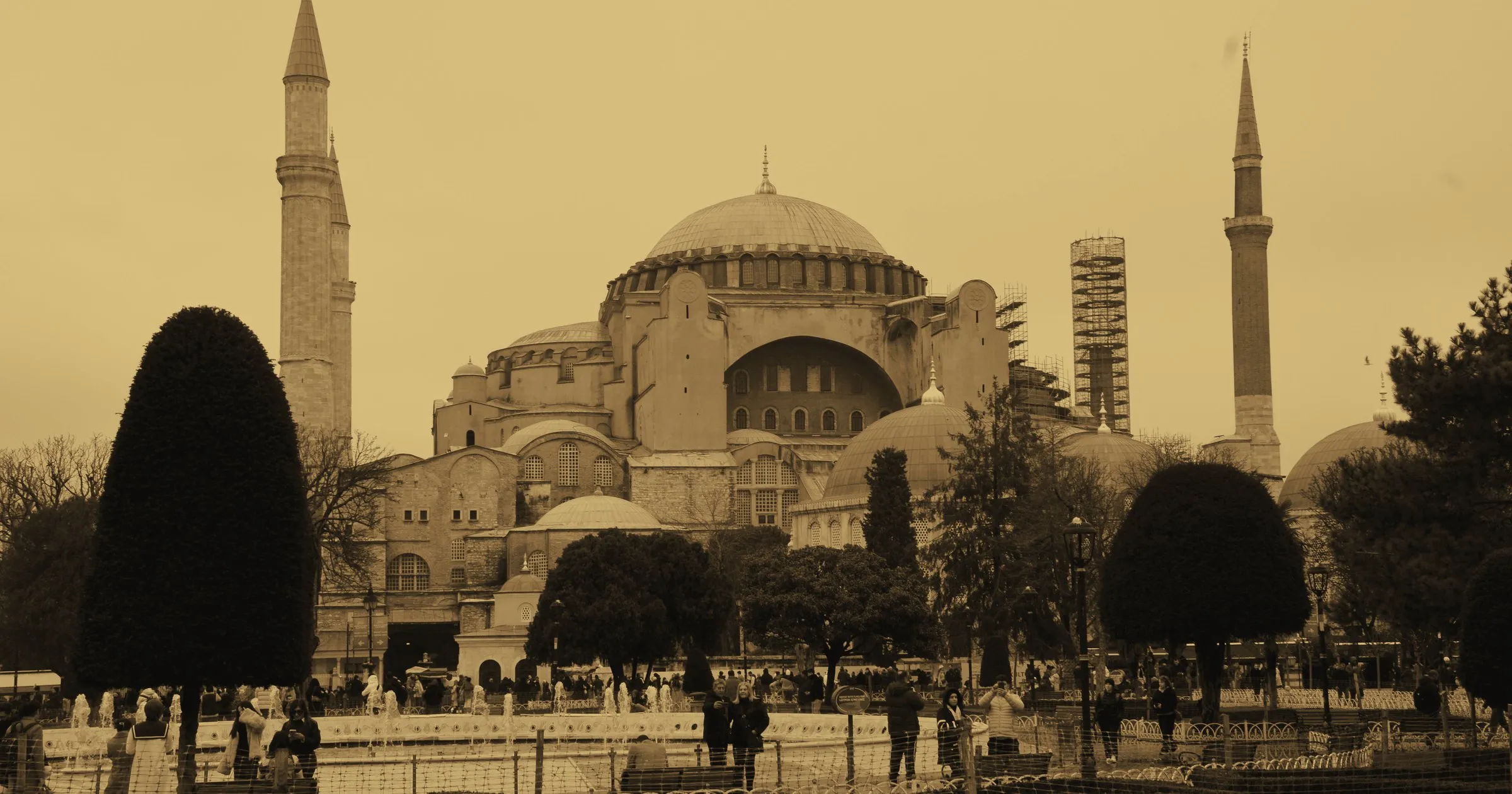
Kemal Atatürk had a century, a state, an army and a school system, and he still could not do it.
Between 1923 and 1938 he ran the most thorough attempt in Islamic history to replace a religious identity with a national one. He abolished the Caliphate. He banned the fez. He swapped the Arabic script for Latin, which at a stroke made every Turk illiterate in everything written before him. He imported Swiss civil law in place of the Shariah. He banned the Sufi orders. He turned Hagia Sophia into a museum. He moved the day of rest from Friday to Sunday.
And it did not take.
The identity came back. Hagia Sophia is a mosque again.
I want to be careful, because this is easily overclaimed.
Kemalism was not a failure by every measure. Turkey built real industry, a capable military, a functioning if troubled democracy. Literacy rose enormously.
It failed at the specific thing it was for. The substitution did not hold, and a century is long enough to call it.
Iqbal saw what nationalism was before most of the Muslim world had finished importing it, and his diagnosis was not political. It was theological.
Among these new gods, the greatest is the homeland. Its garment is the burial shroud of religion.
Not a metaphor about excessive patriotism. A claim that nationalism is a rival religion, competing for the same slot, and that where it wins it buries what it replaced.
It supplies a story about who you are and what you belong to. It has a sacred symbol, and people do treat a flag as sacred; try burning one and watch what happens. It has a hymn you are expected to stand for. It marks the boundary of moral obligation, which is the one that matters: inside the line, obligation; outside it, foreign policy.
That is not an analogy to religion. It is a religion's functional specification, met item by item.
And I would not want to argue that national feeling is simply false. People do love the place they are from, the particular food and jokes and weather of it, and there is nothing disordered about that. Islam does not require anyone to feel nothing about home.
The claim is narrower. It is about ranking. Nationalism does not ask to be one loyalty among several. It demands to be the highest, because it cannot function otherwise: conscription, taxation and law all require that the state outrank whatever else you belong to.
Which is why the Turkish experiment matters more than as a historical curiosity.
It is the strongest test anyone has run. Maximum state power, total institutional control, a full century, and a genuinely capable founder who was not stupid and not merely cynical.
It did not hold. Iqbal called the homeland the newest of the new gods. The Turkish century suggests the older one was harder to bury than the shroud was made for.