
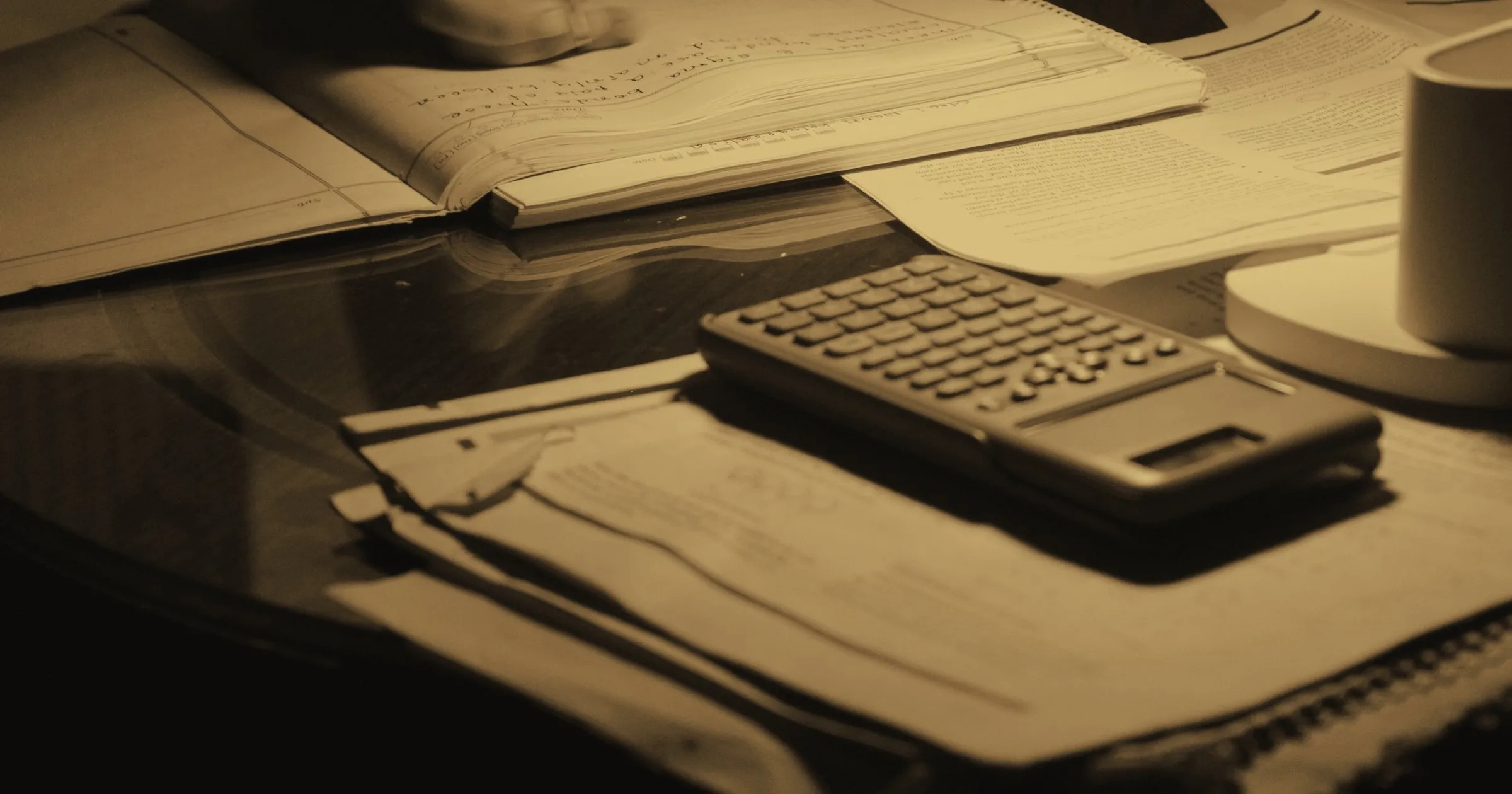
There is a man you have met, or you are him, or you are married to him. He has more money than he will ever spend. Not billionaire money, which is a different illness. Ordinary professional money. Enough to eat without thinking about it, house a family, take a holiday, get the children through school, retire without panic.
He cannot stop. He checks the investments. He runs numbers at three in the morning that do not need running, because the numbers are fine. He runs them anyway.
We have a word for this and the word is greed, and I think the word is wrong. Not slightly wrong. Wrong in a way that sends every attempted cure off in the wrong direction.
Greed is an appetite. It has an object. Greed can be fed.
What the man at three in the morning has is not an appetite. He does not want anything. He is not trying to get. He is trying not to lose.
That is a dread, not an appetite, and dread does not work the same way. Feed an appetite and it quiets. Feed a dread and it grows, because the thing you fed it with is now also at risk. Double his money and you have doubled the size of the thing that can be taken from him.
If the problem is greed, the treatment is restraint. Want less. Be content. Practise gratitude. And people try that, sincerely, and it does not work, and they conclude they are spiritually defective. They are not. They have been handed the cure for a condition they do not have. You cannot restrain your way out of a fear.
The fear is not irrational. Fear of loss is not a response to a might. It is a response to a will. You will lose your money, your house, your work, your strength, your face, your relevance, the people you love, and your own body. Every item.
So the man at three in the morning is not miscalculating. His arithmetic is correct. He is going to lose everything.
The error is not in the fear. The error is one layer down, in the premise that makes the accurate observation unbearable.
If you owned it, then losing it is theft. If you were holding it, then losing it is return. Same event. Same facts. The fear is load bearing in one case and pointless in the other, and nothing about the world has to change for it to move from one to the other.
Which leaves a question worth asking before you check the numbers again tonight. Not how much would be enough. There is no such figure and you know it. Ask instead what you think is being taken, and whether it was ever yours to lose.