
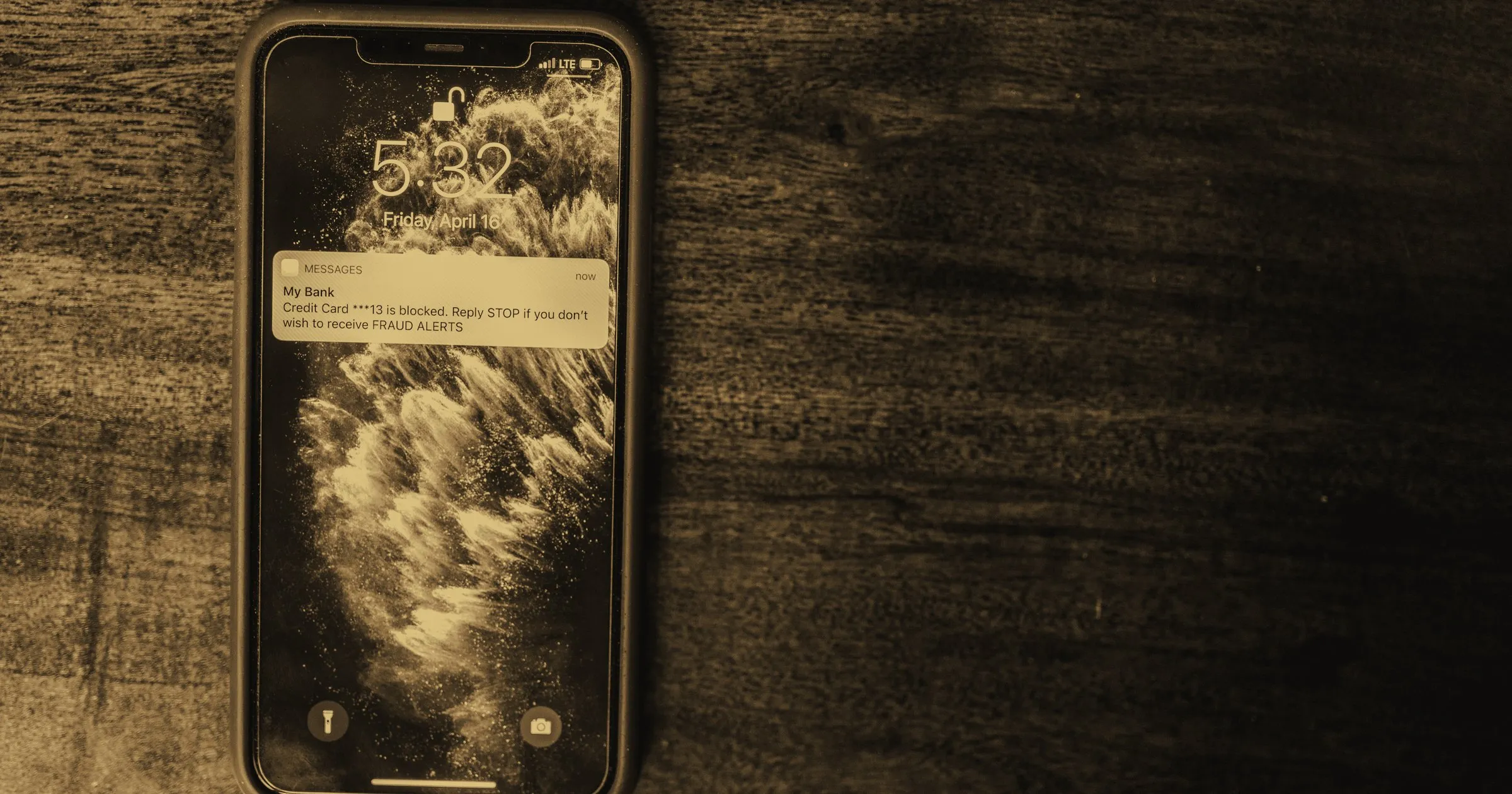
Think about the first thing you did this morning. Not the thing you would say if someone asked about your morning routine. The actual first thing, the one your hand did before your brain was fully on.
You reached for your phone.
Still horizontal, one eye working, you checked. Messages, notifications, email, the balance, the feed, the news, whatever your particular version is. Nothing had happened overnight. You checked anyway.
You were not curious. You were doing an audit.
Watch what you are actually checking. It is a list. Money still there. Messages still coming. Work still intact. Standing still roughly where you left it. Nobody has said anything about you. Nothing has been withdrawn overnight.
Everything on that list is something you believe belongs to you.
And the proof is in what happens when the audit comes back short. Something lower and more physical. A drop. The email that starts "can we have a quick chat", the message that has been read and not answered, the number smaller than the number you had in your head. That specific feeling has a specific shape, and the shape is the shape of something being taken.
You can only be robbed of what you thought was yours.
Put it to the test on the hardest case. Not the house, which you can at least sign for. Your body.
You feed it, you exercise it, you take it to the doctor, you dress it and present it to the world as you. Surely that one is yours. Except it started declining the moment it stopped growing, on a schedule you did not set.
Nobody in the history of the species has renewed that lease. Not one person. You did not own it. You have been living in it.
When you tell someone in the modern world that they own nothing, they hear a threat. That reaction is the frame defending itself. Inside the ownership frame, "it is not yours" can only mean "it is being taken."
Step outside it for one second and the sentence inverts. If nothing is yours, nothing can be taken from you. You do not become more secure. You stop needing to be.
Which leaves the obvious question, and I am not going to dodge it. Custodianship implies an owner. Nobody holds something in trust in a vacuum. If it is not yours, whose is it?
Tomorrow morning, before you reach, notice that you are about to take inventory. Ask what you think is in the account. Then ask who opened it.