
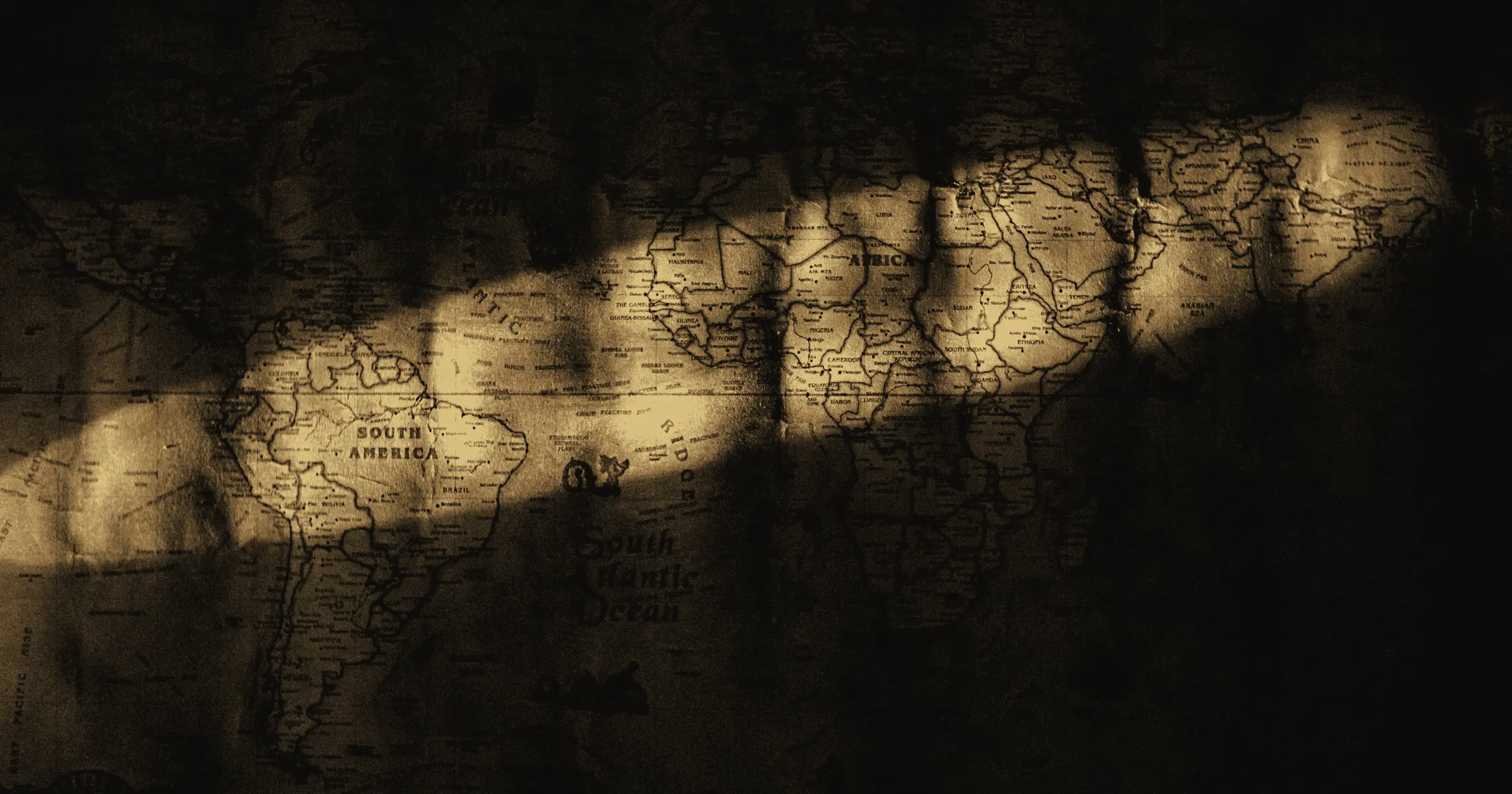
The Dark Ages were not a period. They were a branding decision, and we know who made it.
Petrarch, in the fourteenth century, looked back at the centuries between the fall of Rome and his own moment and called them dark. He meant it as a literary judgement about Latin prose style, which had declined from the Ciceronian standard he admired. It hardened into a description of an epoch, and then into a description of the world.
The trouble is what it required everyone to not look at.
Those centuries were dark only if you restricted your gaze to Western Europe. Look east in the same period, to Constantinople, Baghdad, Cairo, Córdoba, Samarkand, Timbuktu, and you are looking at some of the most luminous intellectual activity in human history.
It was dark in Europe. It was dark in Europe specifically because Europe had lost the material that the Islamic world was at that moment preserving, extending and transforming.
If the medieval centuries were dark, then what happened in fifteenth-century Italy was a rediscovery. Europe wakes, finds its own classical inheritance where it left it, and resumes. The story has continuity, self-sufficiency and no debts.
If the medieval centuries were luminous elsewhere, then what happened in Italy was a reception: Europe acquiring, at considerable effort and from a living civilisation, material that had been kept alive, argued with and substantially improved by people it was simultaneously at war with.
Same events. Completely different story. The difference is entirely in whether you count what was happening outside the frame.
And the received version has a specific problem, which is that it cannot explain its own contents.
If the Renaissance is Europe rediscovering Greece and Rome, then everything in it should be Greek or Roman. But a great deal of it is not, and has no classical precedent at all.
Algebra is not Greek. Ibn al-Haytham's experimental method is not Greek; it is a correction of Greek optics. The numerals are Indian.
A rediscovery of antiquity cannot produce things antiquity did not have. A reception from a living tradition can, and did.
I want to be fair to Petrarch, because he is not the villain of this and did not intend a fraud.
He was making an aesthetic complaint about Latin style, from inside a culture that genuinely had lost most of its classical texts and genuinely had declined in the ways he described.
What turned a stylistic judgement into a civilisational myth was the four centuries of scholarship that found it useful and kept it: humanists building a classical pedigree, Enlightenment philosophers needing reason to have a European birthplace, Victorian historians writing at the height of empire and requiring a story in which Europe had always been the author of its own achievements.
Each generation received a convenient frame and passed it on slightly more firmly attached.
Which is exactly the mechanism this book describes for knowledge, running in reverse. A chain of transmission, carefully maintained across centuries, each link faithfully handing on what it received.
Only what was being transmitted, in this case, was a hole in the map.