
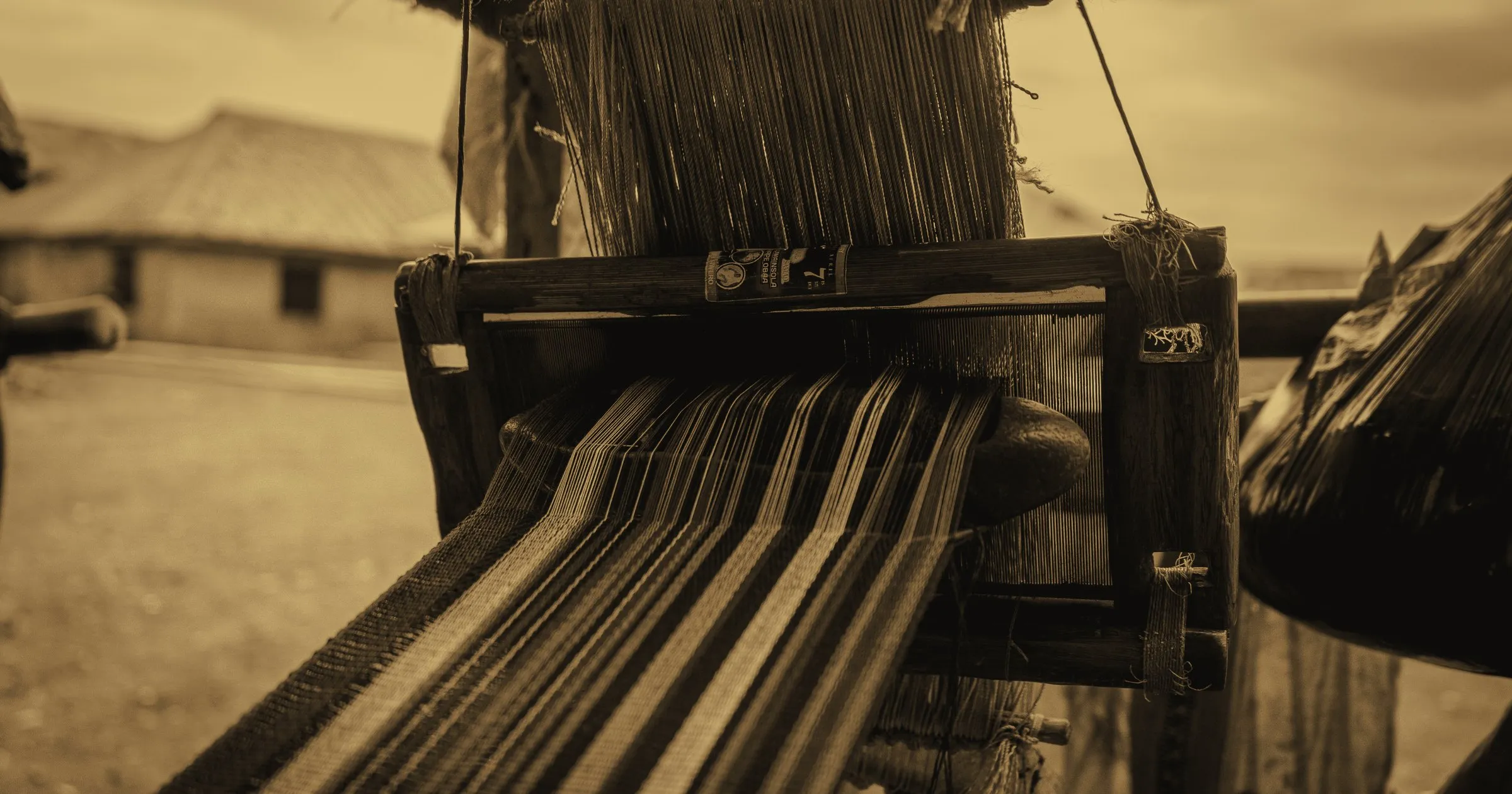
For most of recorded history, if you wanted the finest cotton cloth in the world, you bought it from India.
Indian weavers had techniques of spinning, dyeing and finishing that Europe could not replicate and in several cases could not explain. Dhaka muslin was so fine it had names describing how it behaved: woven air, evening dew.
Within a single generation in the nineteenth century, India went from the world's largest exporter of textiles to a net importer of British cloth.
The usual explanation is that Britain simply invented better machines. That is part of it. It is not most of it.
I want to be careful about the causation here, because the economic history is genuinely contested and the strong version of the claim is not necessary.
Mechanised spinning did produce a real cost advantage, and it would have displaced hand production to some degree whatever policy had been in place.
Economic historians argue about the weights, and anyone who tells you the question is settled is telling you about their politics.
But the weights are not the point. The point is what the displacement did to knowledge.
Because a body of technique is not a stock. It is a practice, held in people, transmitted by apprenticeship, and it exists only while someone is being paid to do it. Make it economically irrelevant for thirty years and it is not dormant. It is gone.
Dhaka muslin is the clean case. The finest grades required a particular cotton cultivar, grown in a particular stretch of the Meghna, spun at a humidity the weavers achieved by working on boats at dawn, by spinners whose training began in childhood and whose eyesight was reportedly finished by forty.
The market went. The cultivar was lost. The last people who could spin those counts died without students, because there was no longer any reason to take one.
Recent attempts to reconstruct it have needed genetics, herbarium specimens and a research budget, to recover something that was routine commercial production in 1750.
The weavers were not out-invented. They were out-legislated and then out-waited, and the knowledge they held went with the trade that sustained it.
And there is an uncomfortable corollary, which is that this mechanism is still running and does not require anyone to intend it.
Every technique currently held by a small number of ageing practitioners, in any field, is one economic shift away from the same ending. Nobody will burn anything. The work will simply stop paying, the apprentices will do something else, and in forty years someone will need a research grant to recover what used to be a trade.