
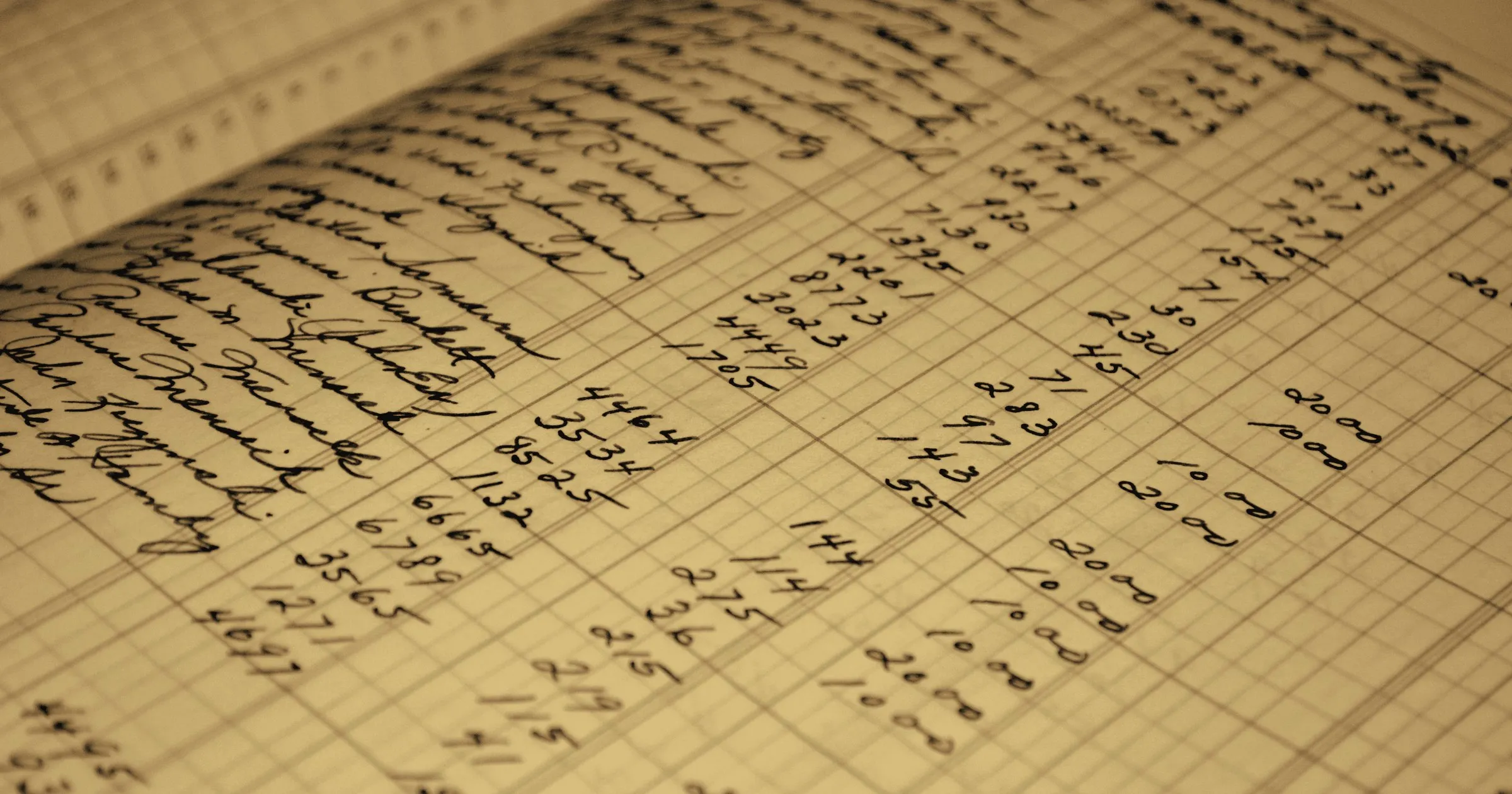
The ten symbols you do arithmetic with were invented in India, refined in Baghdad, and adopted by Europe. Every stage of that is documented, and at every stage the people receiving them said where they came from.
Brahmagupta, writing in seventh-century India, set out rules for zero as a number in its own right: what happens when you add it, subtract it, multiply by it. Not a placeholder in a column, which several cultures had, but a quantity you can calculate with.
In the eighth century an Indian astronomical text reached Baghdad. Al-Khwarizmi saw what it contained and wrote a treatise introducing the system to the Arabic-speaking world.
He called the numerals al-arqam al-hindiyya. The Indian numerals.
He was not being generous. He was being accurate, and accuracy about provenance was a professional norm.
The system travelled on: refined by generations of Islamic mathematicians, embedded in the algebra al-Khwarizmi built around it, carried west through al-Andalus and the Mediterranean trading ports.
In 1202 Leonardo of Pisa published the Liber Abaci and introduced it to a Europe still counting in Roman numerals. He too said where he got it: from Arab merchants and scholars in North Africa, where his father worked as a trade representative.
So the honest title page of European mathematics reads: Indian invention, Islamic refinement, European adoption. Every party to the transfer agreed on that at the time.
And it is, on any reckoning, the most consequential knowledge transfer in the history of mathematics. The entire technical edifice of the modern world rests on ten symbols, one of which stands for nothing, all of which came from somewhere else.
Every participant in this chain credited the previous one. Al-Khwarizmi called them Indian numerals. Fibonacci said he learned them from Arabs.
The register was kept, carefully, for six hundred years.
Then Europe received the material and, over the following centuries, stopped keeping it. We call them Arabic numerals, which at least gestures at one link. We do not call them Indian numerals, which is what the people who introduced them to the West called them, in writing, in a book with that claim in the title.
The erasure was not committed by the people who did the transmitting. It was committed by the beneficiaries, later, once the debt had stopped being useful to acknowledge.
Which means the chain in this book's title is not a metaphor for how knowledge feels. It is a description of a real practice, with a documented standard, that a civilisation maintained and another one let lapse.