
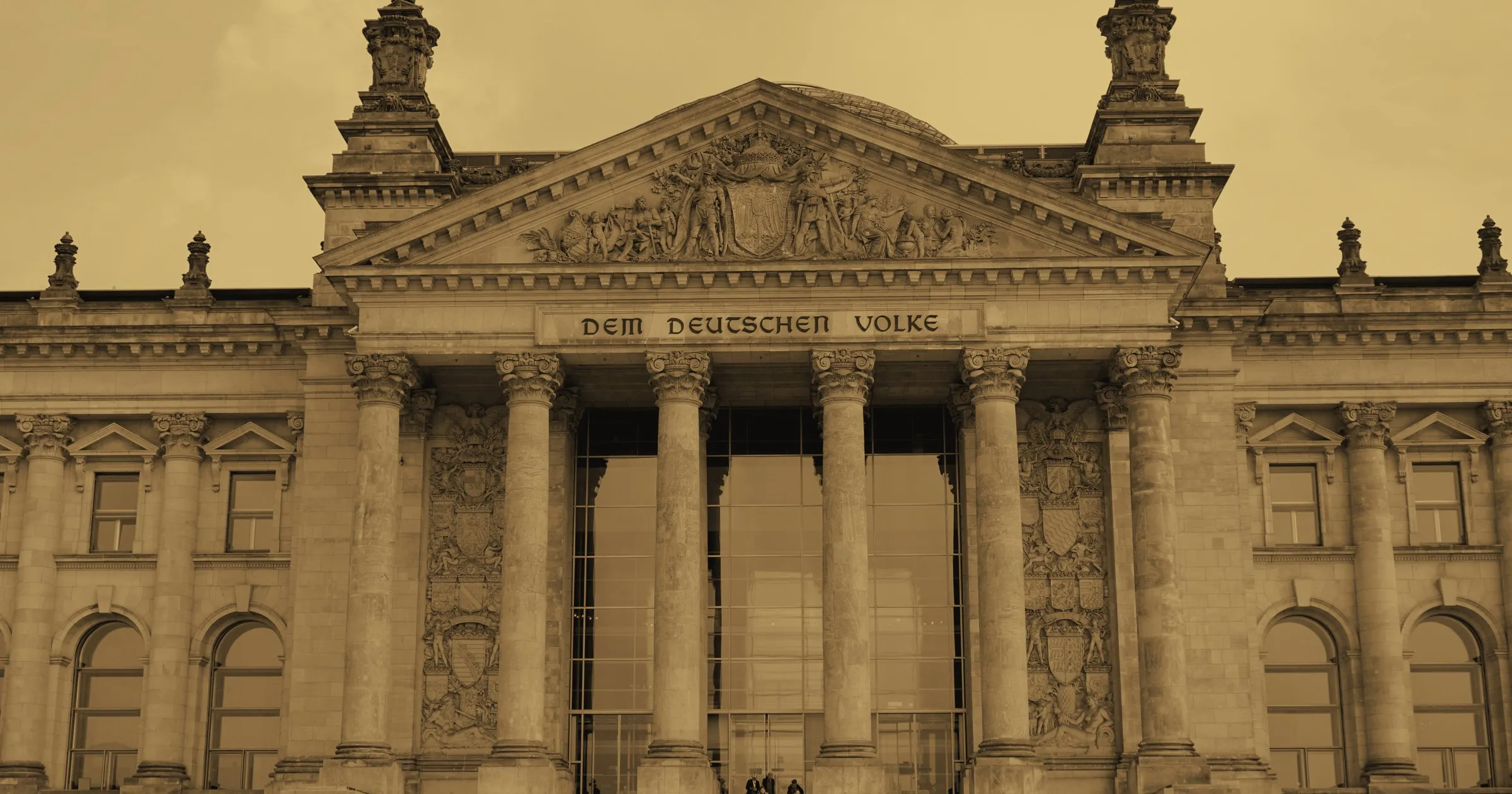
Every era of the machine needs a word for its target. Germany and Austria have supplied the current one: "political Islam."
It is a remarkably useful term. "Islam" is too broad; targeting a religion outright needs an explicitness Europe no longer permits. "Islamism" is too narrow; it names one specific ideology. "Political Islam" sits in between. It sounds specific and definable. In practice it has no stable definition at all.
Watch what it can hold. A mosque that runs a food bank is building parallel infrastructure. A Muslim school that teaches Arabic alongside the national curriculum is promoting separatism. An organisation that challenges discrimination is pursuing an Islamist agenda. A Muslim politician whose policies draw on Islamic principles is importing religion into the secular sphere.
The boundaries are set not by what the people inside do, but by what the state needs.
Austria built the apparatus first. A 2015 law banned foreign funding of mosques, required imams to be trained in Austria, and put Muslim organisations' governance and finances under state oversight. No other religious community faced the same. In 2020 came a state-funded Documentation Centre for Political Islam. In 2021, an "Islam Map" locating more than 600 Muslim institutions across the country, presented as a research tool.
A centre to identify. A map to locate. A law to regulate. That is the census that comes before the classification.
Germany's version works on a larger scale. For decades it told its Turkish workers they were temporary: they would work, save and go home, because Germany was not a country of immigration. They stayed. Their grandchildren were born there. And they were told, all their lives, that if they learned the language, adopted the values and took part in civic life, they would belong.
They did. Now look at who "political Islam" catches. Not the withdrawn or the silent. The organisers, the advocates, the candidates, the people who took the invitation to participate at its word.
The largest Muslim umbrella body is scrutinised for its links to the Turkish state, and some of the concern is fair. But the conclusion drawn, that organised Muslim religious life is inherently political and so inherently suspect, is not applied to the Catholic Church's links to the Vatican. The category is reserved for the current target.
This is why the term matters beyond Germany and Austria. It is already appearing in British policy papers and think tank reports.
It needs no violence, no crime, no proscribed organisation. Only a Muslim who is politically active. It is precise enough to target civic engagement without triggering the protections that exist for religious identity.
The machine does not reward integration. It renames it. What you were told was belonging is filed as infiltration, and the Muslim, whatever he does, stays on the wrong side of the line.