
There is a question that every Muslim household in Europe carries. Nobody asks it out loud at the dinner table. It surfaces in fragments: on the drive home from the mosque, in bed after the news.
What if the laws keep tightening? What if the language that once belonged to the far right becomes the ordinary language of the centre? What if the country you were born in decides that you do not belong?
People treat it as a hypothetical. It is not. It is a historical question, and history has answered it, many times, with a consistency that should unsettle anyone paying attention.
Start with an irony so large it has become invisible.
The civilisation that now tells Muslims they are incompatible with its values was built, in significant part, by Muslims. Aristotle survived in Arabic when the Greek was lost. Algebra carries an Arabic name because al-Khwarizmi gave it one. Ibn Sina's Canon of Medicine was Europe's standard medical text for centuries, and Jewish scholars carried that knowledge alongside Muslim ones from Baghdad to Córdoba to Paris.
Europe took the knowledge and built on it. Then, in 1492, the same Spain that had hosted that collaboration expelled its Jews and began dismantling its Muslim civilisation. Not defeated. Erased.
I have done everything the integration debate has ever asked. A career, a mortgage, children in British schools, taxes paid on time. And I know that none of it is enough. My belonging is conditional, and the condition is the point.
What is happening to Muslims in Europe is not new. For a thousand years Europe has done the same three things to its minorities: marked them as different, used them, and removed them when the moment called for it. Cathars, Jews, Irish, Roma, Huguenots, Moors. The target changes. The mechanism does not.
That is not despair. A pattern you can see is a pattern you can prepare for. What destroys a community is not the machine. It is surprise.
A man once asked the Prophet, peace be upon him, whether he should tie his camel or trust in God. The answer was: tie your camel, then trust in God.
Most of us have been doing the second half only. We have trusted in good laws, good neighbours, and the idea that it could not happen here. Those are not nothing. But they are not a knot.
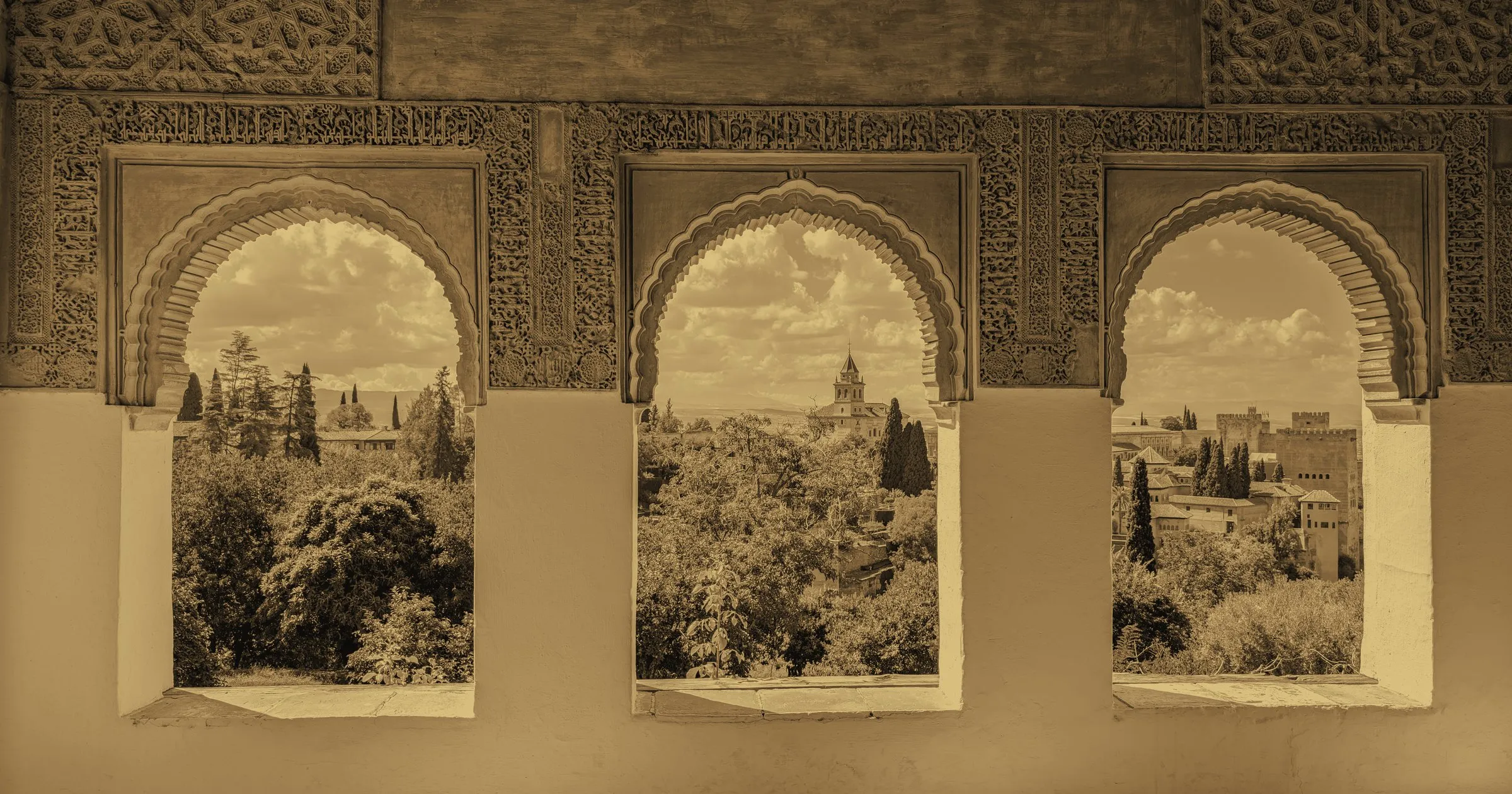
On the walls of the Alhambra, carved by a civilisation that also believed it was permanent, is a line that has outlasted the people who carved it. La ghalib illa Allah. There is no victor but God.
The question is whether we read it in time.