
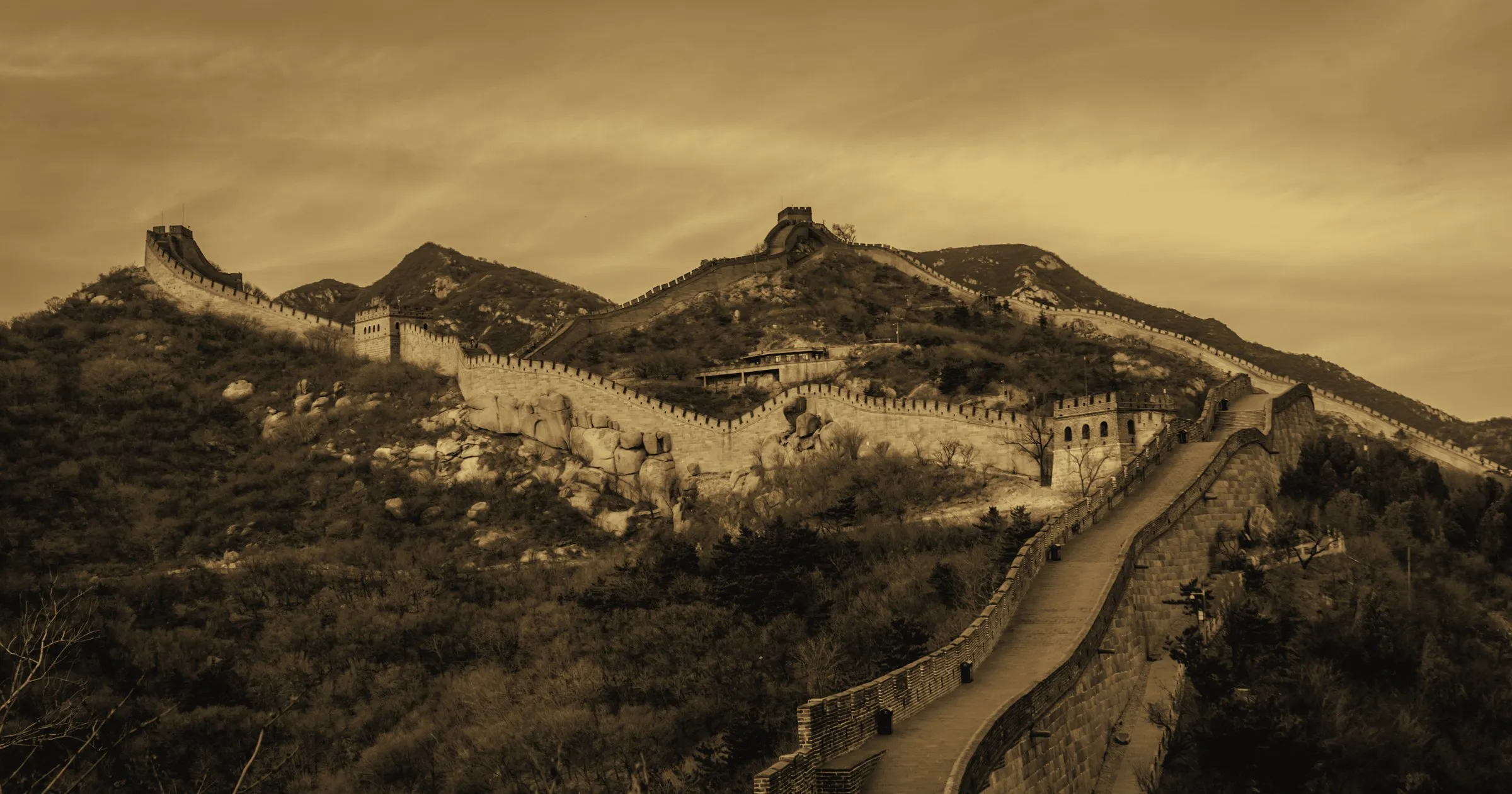
China's claim to be the next knowledge superpower rests on numbers that are not in dispute.
More STEM graduates than any other country by a wide margin. More patents filed. More papers published, and in several fields more papers that get cited.
China also, unlike the West, remembers.
It knows about Bi Sheng and movable type, about the compass and gunpowder and paper, about the centuries of technological lead documented in this book's eighth chapter. The national story has that inheritance in it, taught and referred to and understood as a return to a previous position rather than an arrival at a new one.
China remembers. The question this chapter asks is whether China thinks.
The distinction is the one this book has been drawing for twenty-five chapters: between producing things and understanding things, between technology and knowledge, between innovation and wisdom.
It is not a slur, and it is not an argument that Chinese researchers are less capable. It is a question about conditions, which is the only question this book has ever really asked.
Because if the next civilisation to carry the chain simply runs the Western model at greater scale, more output, more growth, more technology, on the same knowledge base, under the same time-poverty and the same market urgency, then nothing has been rescued. The chain has changed hands, and the new hands are just as busy.
Then there is the part that cannot be engineered around. Inquiry has to be able to arrive somewhere unwelcome. That is not a Western value bolted onto science; it is the operating requirement. A system that can fund anything except a conclusion it has ruled out in advance has capped what it can discover, however much it spends.
India's position is different and in one respect more interesting.
It has the demographic weight, a very large scientific diaspora, a deep indigenous mathematical and philosophical tradition it has never entirely lost, and an argumentative public culture that does not require permission. What it has conspicuously lacked is money and institutional continuity, which are the two things this book keeps saying are decisive.
Everything in this book says the conditions are what decide it, not the civilisation. Baghdad was not destined. Toledo was not destined. Song China was not destined, and it stopped.
The obvious prediction is that the next knowledge civilisation is whichever of these has the most computation and the biggest research budget.
The prediction this book makes is different. It will be whoever first decides that thinking is worth protecting from the things that currently interrupt it, and builds institutions to do that which outlast the people who built them.
Remembering the inheritance is a good start, and China has done more of it than anyone. But remembering that your ancestors invented printing is not the same as creating the conditions in which somebody could do it again.