
A young Muslim software engineer writes machine learning code for a living. She is good at it. She has a degree from a reputable university and a job that uses it.
She has never heard of Ibn al-Haytham.
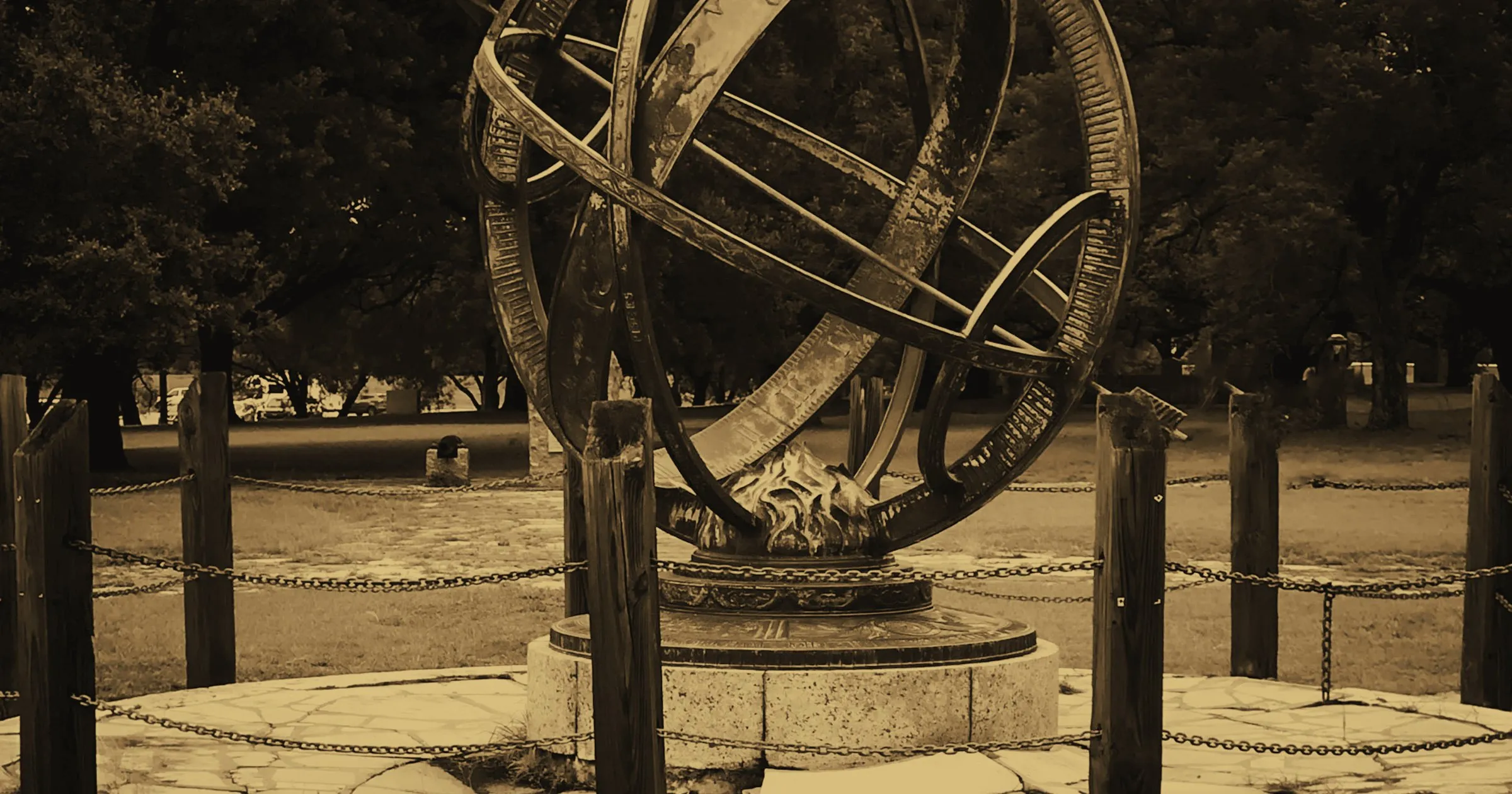
She has a vague awareness of something called Islamic contributions to science, which in the British curriculum means one lesson in Year 8, sandwiched between the Crusades and the Black Death, with a picture of an astrolabe and the information that Muslims preserved Greek knowledge during the Dark Ages.
Preserved.
That single word does more damage than the omission around it.
It casts an entire civilisation as a storage facility. A dry attic where Greek books were kept safe until Europe was ready to collect them.
The woman writing the algorithms does not know that al-Khwarizmi constructed the algebra her models rest on, or that the word algorithm is a Latinisation of his name, so that she says it several times a day.
She does not know that Ibn Sina's Canon was the standard European medical text for five hundred years, or that al-Biruni calculated the Earth's radius to within one percent, or that Fatima al-Fihri founded what is generally reckoned the oldest continuously operating university in 859, or that Córdoba's libraries held hundreds of thousands of volumes while London's held dozens.
None of that is preservation. It is production, at a scale and quality that the curriculum's single word is designed, whether anyone intends it or not, to make invisible.
She does not know these things because nobody told her. Not her school, not her university, not the culture she grew up in.
Nobody told her at the mosque either.
Not her family. Not the community that describes itself as venerating knowledge, quotes the first revelation constantly, and has in practice spent several centuries forgetting what it produced.
Veneration of knowledge as an abstraction is not the same as knowing what your predecessors found out, and it is considerably cheaper.
So the honest version of the question this chapter asks has two halves, and only one of them is anybody else's fault.
What went wrong? Plenty, and much of it was done from outside. The Mongol destruction was real. Colonial administration dismantled the institutions, as an earlier chapter here sets out. The curriculum that gave her one lesson and the word preserved is not her invention.
But institutions were also allowed to ossify from within. Inquiry that had once been a religious obligation came to be treated with suspicion. The silsila habit of recording exactly who you received something from, which this book has praised for twenty-seven chapters, hardened in places into a rule that receiving was the whole of the job and that extending it was presumption.
A tradition that produced al-Ghazali and Ibn Rushd arguing furiously in public, and later found argument itself suspect, did that to itself.
The inheritance is not a list of achievements to be recited. It is a set of practices: fund the work, protect the people doing it, record your sources honestly, argue in public, and treat understanding the world as the thing you were made for.
The woman writing machine learning code is using al-Khwarizmi's mathematics and saying his name all day without knowing it.
The chain reached her. Nobody told her she was holding it.