
In July 1209, a crusading army stormed the town of Béziers in the south of France and killed its people. The soldiers, the story goes, asked the papal legate how to tell heretics from Catholics. He is said to have answered: "Kill them all. God will know His own."
Whether he said it is contested. It has survived because it describes something true. Once a population has been labelled, the individuals inside it stop mattering. Only the label does.
The people being hunted were the Cathars. They were not Jews, not Muslims, not foreigners. They were French Christians who read the same scriptures and lived in the same towns as the people who came to kill them. Their theology was different. Their region, the Languedoc, was also wealthy, cultured and inconveniently independent of the French crown.
Pope Innocent III offered the northern barons the same spiritual rewards as a crusade to the Holy Land. They came for faith, and for land.
That combination repeats through everything that follows. A label marks the target, an ideology justifies the attack, and a material interest makes it worth doing. England's Jews lost their assets in 1290. The Moriscos lost their property in Spain. The Holocaust came with the looting of homes, art and wealth.
The crusade lasted twenty years. It broke the Languedoc's independence, wrecked its economy and ended the Cathars as a social force. Within a century, its language was being pushed aside and the region was a province of the north. The machine removed the people, and then the world they had lived in.
But the most important thing the crusade produced was not a massacre. It was an office.
In 1234 the Inquisition was established, partly to finish off what the armies had left. It turned an episode into a permanent institution: surveillance, investigation, trial and punishment, with a staff and a procedure.
And an institution does not close when its first job is done. It looks for its next one. The Inquisition built to root out Cathars went on to pursue Jews, Muslims, Protestants and accused witches. The apparatus outlived the heresy it was made for by centuries.
That is the lesson worth carrying into the present.
Watch what is built, not only what is said. Every monitoring programme, every database, every power created to watch one suspect community is presented as a response to a particular danger. The Cathars show what happens next. The danger passes. The machinery stays, and it is handed to whoever the next target turns out to be.
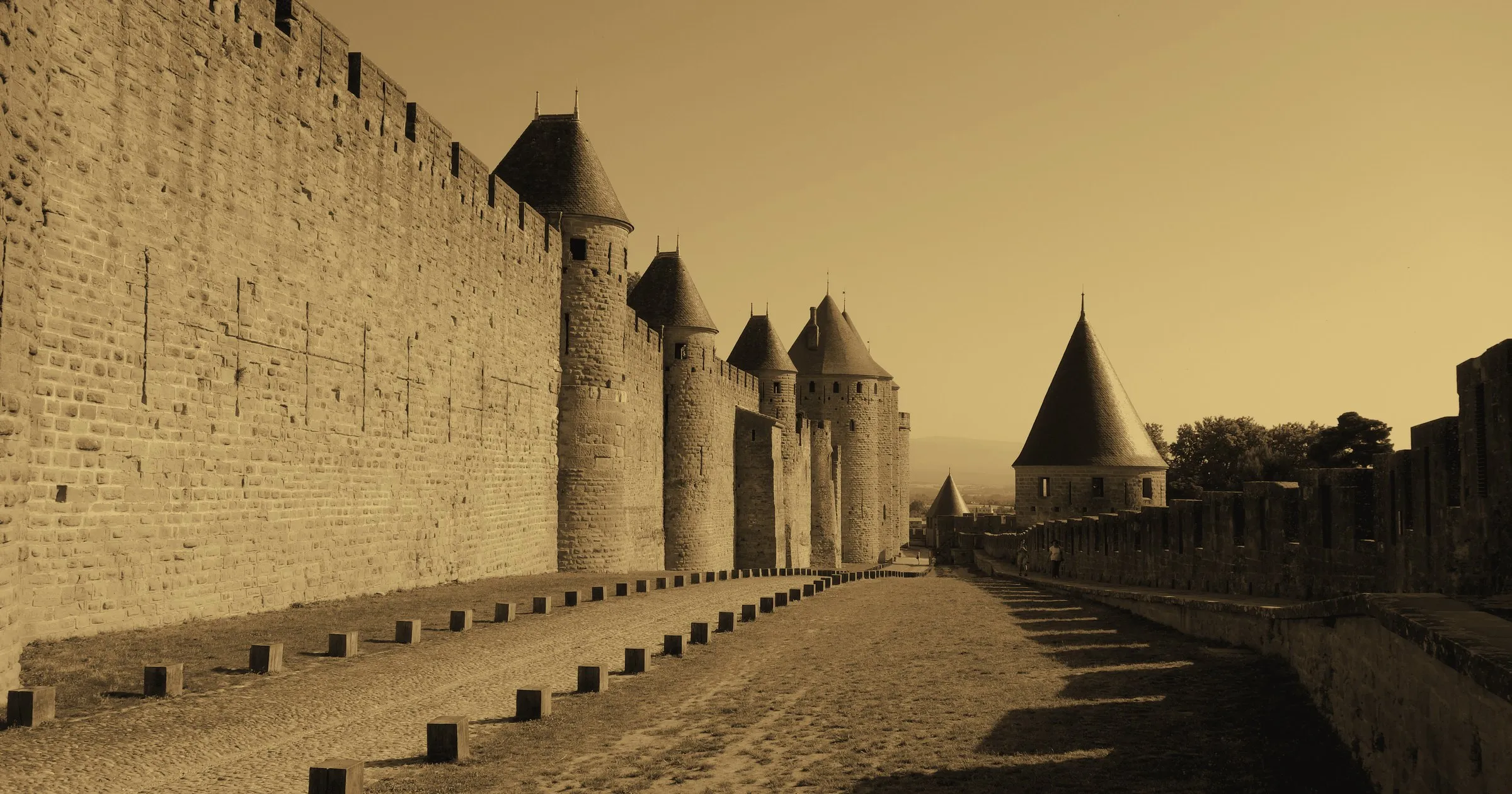
The Cathars themselves are gone, remembered now in ruined castles and tourist leaflets.
The office that finished them is not. It changed its name many times.
It never closed.