
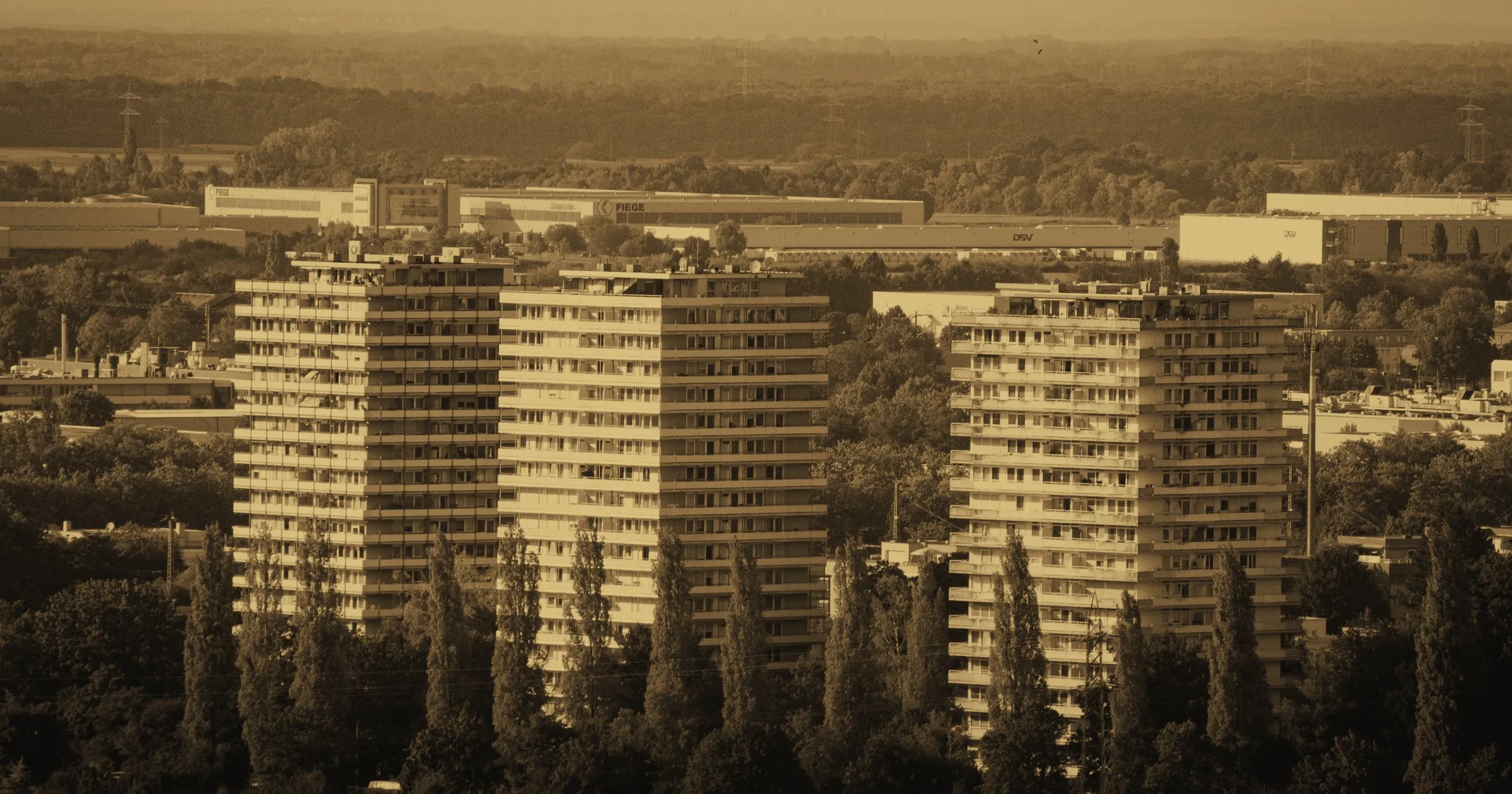
If you want to see what the machine produces when it has finished with a population, do not read a policy paper. Stand in the courtyard of a grand ensemble in Clichy-sous-Bois or La Courneuve. Look at the broken lifts, the unlit stairwells, the shuttered shops, the missing clinics, the missing buses.
Then take the train into central Paris and walk to the Élysée. It is perhaps twenty kilometres. In every way that matters, it is a border.
None of this happened by accident. North African workers who came to France in the 1950s and 1960s were first housed in shanty towns of corrugated iron, without water or sanitation. The state cleared them because they were an embarrassment, and put up tower blocks on the cheapest land it had, which meant the land furthest from work, services and culture, with poor transport in between. Housing, not places to live.
The white working class they were built for left as soon as it could. The families with no alternative moved in. In colonial Algiers, the Europeans had the centre and the Muslims had the Casbah and the edges. The banlieue rebuilt that map inside France.
Britain did it in reverse, inner city rather than outer ring: the old mill terraces the white working class was leaving. Germany did it in Kreuzberg and Neukölln and Marxloh. Different buildings. The same containment.
Now watch how the result is explained.
The estate is poor because its residents are Muslim. Because they will not integrate. Because their culture does not fit modern life. The explanation is always cultural. The cause is always structural. And the gap between the two is one of the machine's most useful parts.
Because a cultural diagnosis produces a cultural cure. Change their religion. Reform their practices. Integrate them harder. The intervention fails, because it treats the symptom. The failure is blamed on the people. A harsher intervention follows. The cycle repeats, and every turn of it confirms the diagnosis.
A structural diagnosis would demand investment, desegregation, enforcement of anti-discrimination law, a real redistribution of opportunity. It would be expensive. Worse, it would move the blame: from a problem caused by Muslims to a problem caused by Europe. So it is not made.
When the estates burn, as they did in 2005 and again in 2023 after the police killing of Nahel Merzouk, the fire is condemned and the conditions are left alone. A population with no voice in parliament, a hostile press and hollowed-out institutions is left with the street.
The banlieue is not a failure of integration. It is a success of the machine, built to specification and working as designed: a classified population, housed apart, always available to blame.
The colony is no longer across the sea. It is across the tracks.