
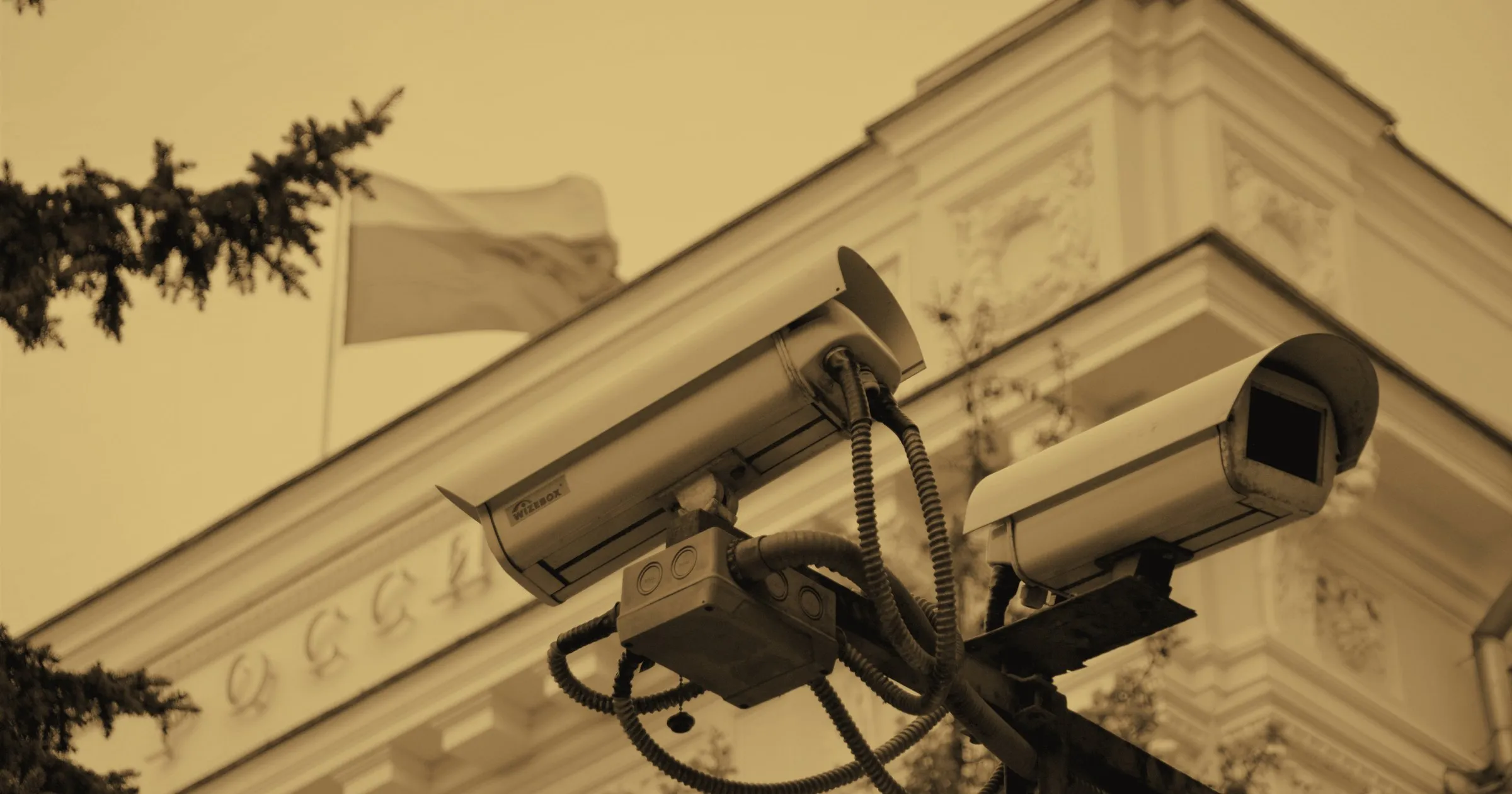
There is a principle about power that Aimé Césaire gave its sharpest form. Every technique a state develops to control a foreign population will, given enough time and enough political motive, be turned on a domestic one.
The tools come home. And the people they were built for find them waiting when they arrive.
France shows it most plainly. In colonial Algeria, from the 1840s, the bureaux arabes governed the Muslim population: officers who spoke Arabic, gathered intelligence, regulated religious practice and watched for resistance. Their job was to manage a Muslim population France did not trust and could not fully control.
Now look at metropolitan France. A state project to build an "Islam de France", with approved imams and approved funding. An official council, set up under state patronage in 2003, to act as the government's channel to Muslims. Mosques closed for "separatism", organisations dissolved, sermons monitored. The institutional memory survived. Only the address changed.
The legal tools came too. The state of emergency declared after the Paris attacks of 2015 lasted nearly two years before its powers were written into ordinary law, and it drew on a tradition of emergency rule that runs straight back to colonial Algeria.
Britain's version came by a different road to the same place: counter-insurgency. The doctrine was built in Malaya, in Kenya, in Northern Ireland, in Iraq and Afghanistan. Each conflict taught the state how to identify a suspect population, recruit informants from within it, and watch for the signs of dangerous belief.
Its domestic form is Prevent. Teachers, lecturers, doctors, nurses and social workers are required by law to report signs of radicalisation, and the signs are drawn widely enough to take in ordinary religious and political life.
I have read the guidance. I know the indicators. A child who becomes more visibly religious. A child with opinions about foreign policy. A child who, in other words, begins to take their faith seriously where their teachers can see it.
Every morning I send my children into a school legally required to watch for exactly that. The architecture was designed in Malaya, refined in Kenya, tested in Belfast. It now operates in the primary school at the end of the street.
The vocabulary has been softened. Suspects are now vulnerable individuals. Intelligence reports are safeguarding referrals. Counter-insurgency is counter-radicalisation. The structure underneath has not moved: a target population, informants recruited from within it, pre-emptive action against people for what they believe rather than what they have done.
Most Muslim families live inside this without being able to name it. That is part of how it works.
So name it. It is not a new response to a new threat. It is an old instrument, brought home, pointed at the descendants of the people it was first built to govern.
The tools always come home. They are always aimed at the same people.