
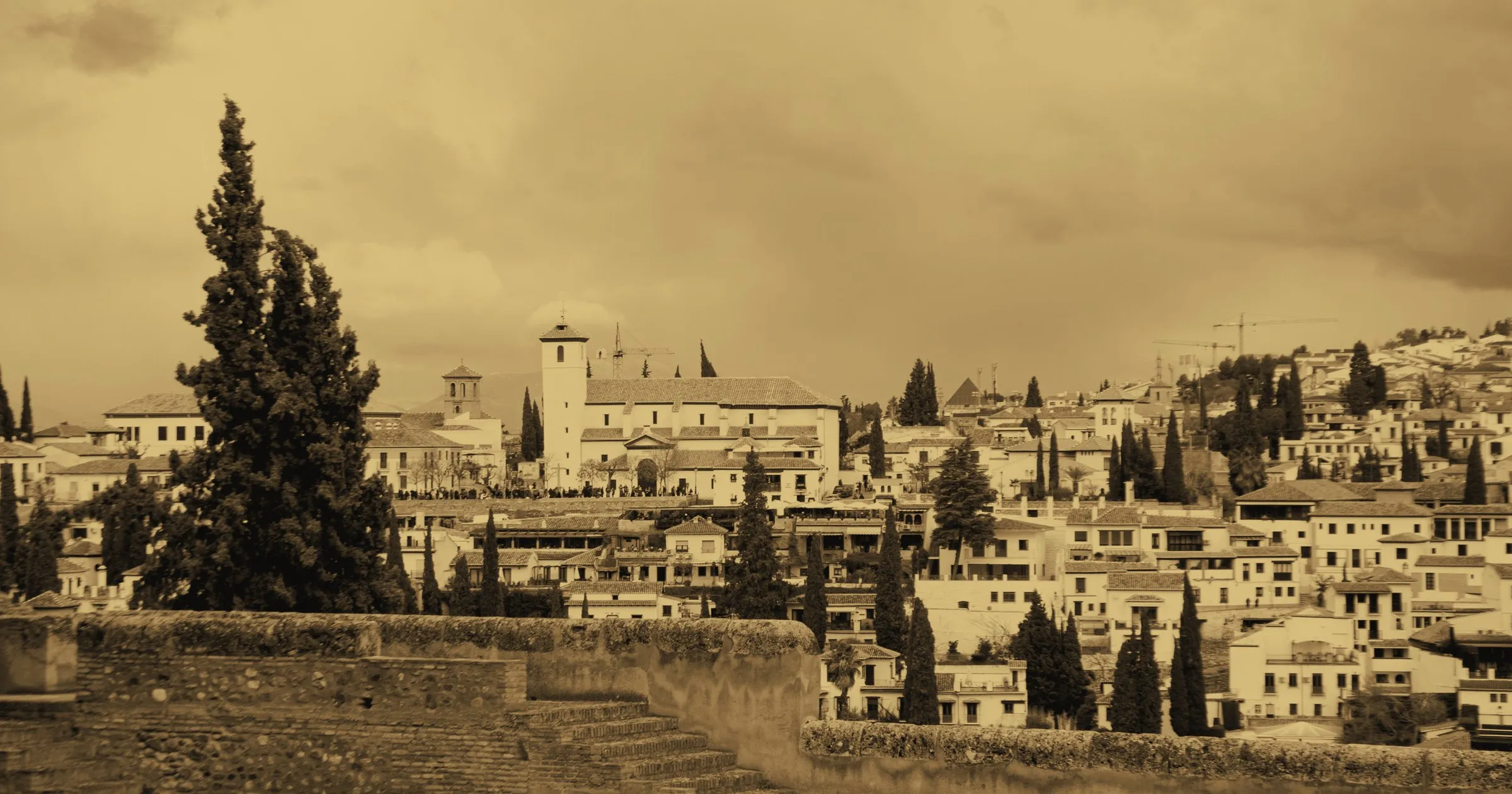
On 2 January 1492, the last Muslim ruler of Granada surrendered the city to Ferdinand and Isabella.
He did not surrender for nothing. The Treaty of Granada guaranteed the Muslim population freedom of religion, the right to keep their property, the right to their own legal system and the right to continue their customs. It was a written promise, signed by a Christian crown, protecting a Muslim people.
It was broken almost immediately.
By 1502, the Muslims of Castile were given a choice: convert or leave. Most converted, at least on paper, and became Moriscos: officially Christian, privately still Muslim in faith, language and custom.
The machine then used the conversion it had forced as grounds for further persecution. The Inquisition searched Morisco homes for Arabic books, prayer rugs, the refusal of pork and wine, the washing before prayer. Any trace of the old faith meant prosecution, torture and sometimes death. The Moriscos had to prove, continuously, to hostile investigators, that a conversion made at the point of a sword was sincere.
When the pressure became unbearable, the mountains south of Granada rose in the Revolt of the Alpujarras. It was crushed, and the survivors were scattered across Castile so they could never gather again.
Then, between 1609 and 1614, some 300,000 Moriscos were expelled from the land their ancestors had lived on for nine centuries. Children under seven were kept behind, to be raised Christian.
Look at what did not protect them.
Duration did not. They had been there for the better part of nine hundred years. Achievement did not. Their Córdoba had been the largest and most sophisticated city in Western Europe, with paved and lit streets, hospitals and libraries, when Paris and London were provincial towns. Contribution did not. The scholarship of Al-Andalus carried Aristotle to Aquinas.
And a treaty did not. The guarantees were real, specific and signed. They held for about a decade.
We tend to think of our rights as solid ground. They are written down. They were won. There are courts to enforce them.
The Muslims of Granada had all of that in 1492. What they did not have was a majority that wanted the promises kept, and a written right does not keep itself. It lasts exactly as long as the people with power choose to honour it.
This is not an argument for despair, or for tearing up the rights we have. Defend them, use them, insist on them. It is an argument against resting on them, against assuming that because something is written it is permanent.
The last sultan of Granada had his guarantees in writing too.
If eight centuries, a civilisation and a signed treaty could not protect a people, ask honestly what you are relying on instead.