
We usually picture atrocity as something done by strangers. Invaders against defenders. Barbarians against the civilised. People who never knew each other's names.
Bosnia does not fit that picture, and that is why it matters.
The Muslims of Bosnia were not newcomers. Islam had grown there over five centuries, taken up by a Slavic, European people on their own soil. By the twentieth century, to be Bosniak was to be Muslim, and to be Muslim in Bosnia was to be Bosnian.
They spoke the same language as their Serb and Croat neighbours. They lived in the same apartment buildings, worked in the same factories, sent their children to the same schools. In the cities, by some estimates, nearly a third of marriages crossed the lines between communities. Neighbours borrowed each other's sugar, went to each other's celebrations, knew each other's children by name.
Then, between 1992 and 1995, they were killed by the people who knew them.
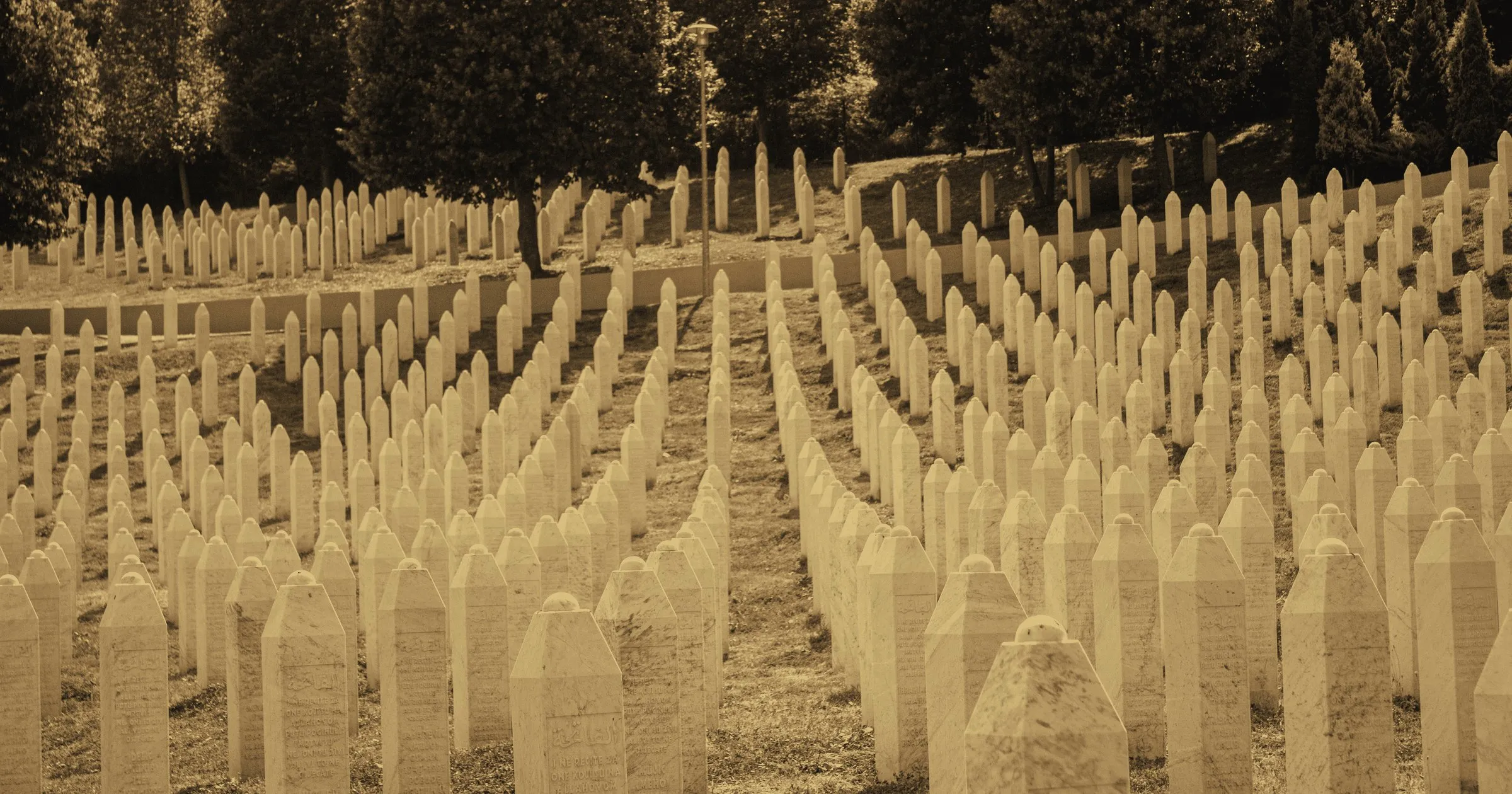
The siege of Sarajevo lasted nearly four years. An estimated 11,541 people died, more than 1,500 of them children. In July 1995, at Srebrenica, a town the United Nations had declared a safe area, Serbian forces separated the men and boys from the women and children and murdered them over about ten days. More than 8,000 were killed. When investigators came, the graves were dug up and the bodies moved, so they could not be identified.
The soldier at Srebrenica may have borrowed his victim's lawnmower the summer before. The sniper in Sarajevo may have bought bread from the woman he shot, every morning for twenty years.
That intimacy is the lesson.
We are told that familiarity breeds acceptance. That if people know us, share streets and workplaces and meals with us, they will not turn on us. Bosnia is the proof that this is not so. When the machine activates, it overrides every friendship, every shared meal, every marriage. It replaces the person with the category. The man who was your neighbour becomes a Muslim. The woman who was your colleague becomes a "Turk." The child who played with your children becomes a future threat.
My children play with their neighbours' children. They have done since they could walk. I think about Sarajevo before the war, where the same was true, and I cannot finish the thought.
None of this means our neighbours are enemies. Most of the people we live beside are decent, and the friendships are real. It means friendship is not a plan.
The people of Srebrenica trusted their neighbours, and a flag, and a promise of safety. Every one of those failed in a matter of days.
Love your neighbour. Just do not mistake your neighbour for your protection.