
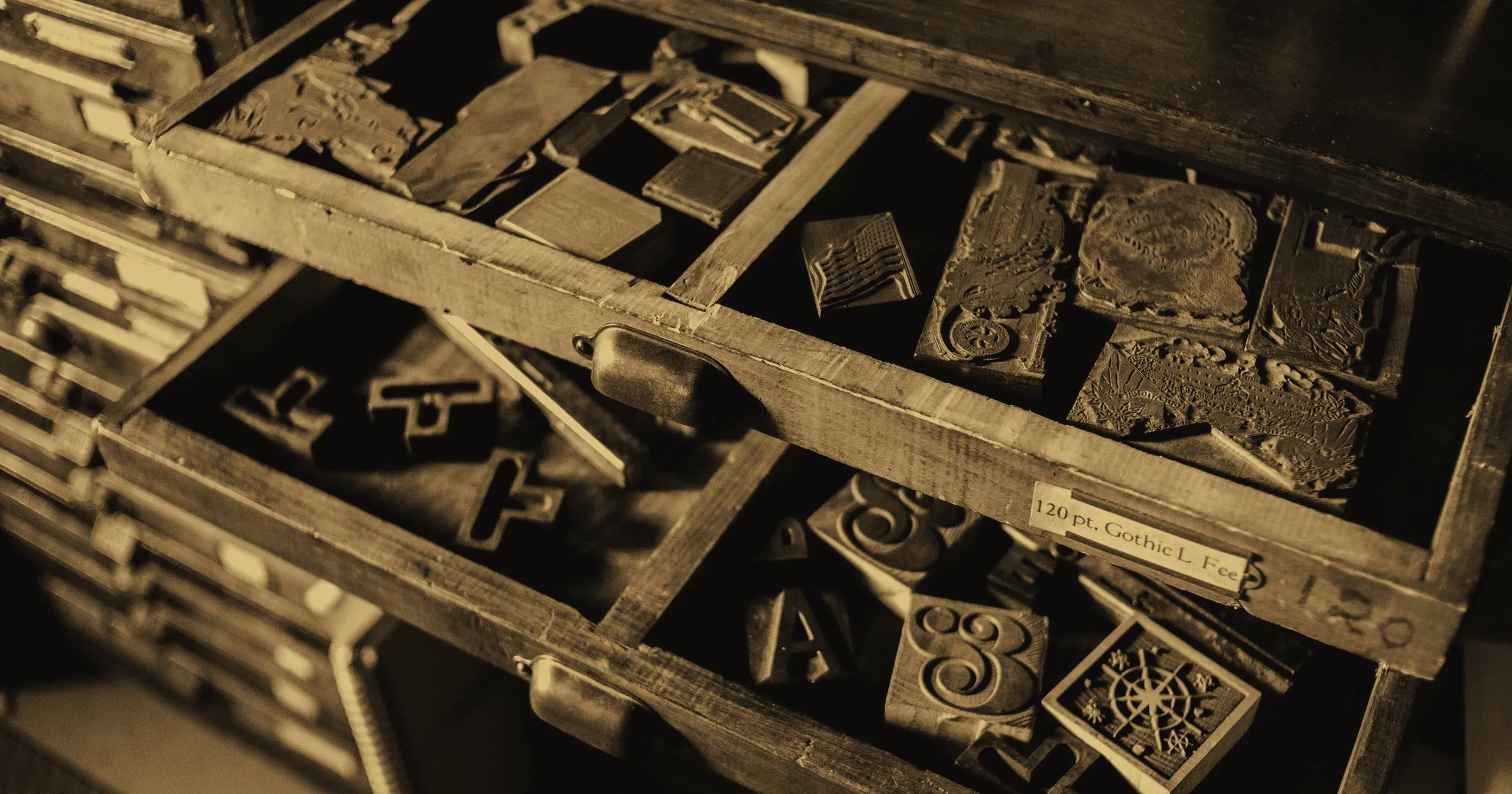
Around 1040, in Song dynasty China, a commoner named Bi Sheng worked out how to set text from individually movable pieces of type. He carved characters into clay, fired them hard, set them in an iron frame on a bed of warm resin, printed, then melted the resin to release the type for reuse.
Four hundred years later Johannes Gutenberg did the same thing in Mainz with metal type, oil-based ink and a screw press. His version was, in several respects, technically better.
It was also four centuries later.
None of this is disputed. Every serious historian of technology knows it. And yet in the popular imagination Gutenberg invented printing and Bi Sheng is a footnote, when he is anything at all.
Movable type is where the list starts, not where it ends.
Paper. Gunpowder. The magnetic compass. The seismograph. The blast furnace.
Take paper on its own, since it is the one that matters most for this book.
Paper did for writing what the internet did for information. It took knowledge out of temples and palaces and put it within reach of anyone who could afford a sheet. Every subsequent chapter of this book, the Baghdad translation movement, the Islamic manuscript tradition, the European printing revolution, happens on Chinese paper.
So why is the credit missing?
The easy answer is racism, and it is not wrong, but it is incomplete and it lets us off too lightly, because the mechanism is more ordinary than malice and therefore much more likely to be running right now.
Credit follows the story a civilisation tells about itself. The European account of the modern world needed a moment of self-generated awakening: the Renaissance rediscovering antiquity, the Enlightenment discovering reason, the printing press arriving at exactly the right moment to spread both. Bi Sheng cannot be fitted into that shape. He does not improve the narrative. He complicates it. So he is not suppressed, he is simply not load-bearing, and things that are not load-bearing get left out of the summary, then out of the textbook, then out of the culture.
The better question, the one this book keeps returning to, is not who arrived first or who invented what. It is: who carried it, and from whom?
Ask that and the argument dissolves. Chinese paper reached the Islamic world after Talas in 751, reportedly through captured papermakers, and Baghdad had a paper mill within forty years.
Gutenberg's press is a real achievement. It is also the last link in a chain that runs back through Islamic Spain, through Abbasid Baghdad, to a Han dynasty official experimenting with bark and old fishing nets.
He did not invent printing. He inherited most of it, improved one part, and got the statue.
Which would not matter at all, except that forgetting where something came from is the reliable first step toward believing you could have produced it alone.