
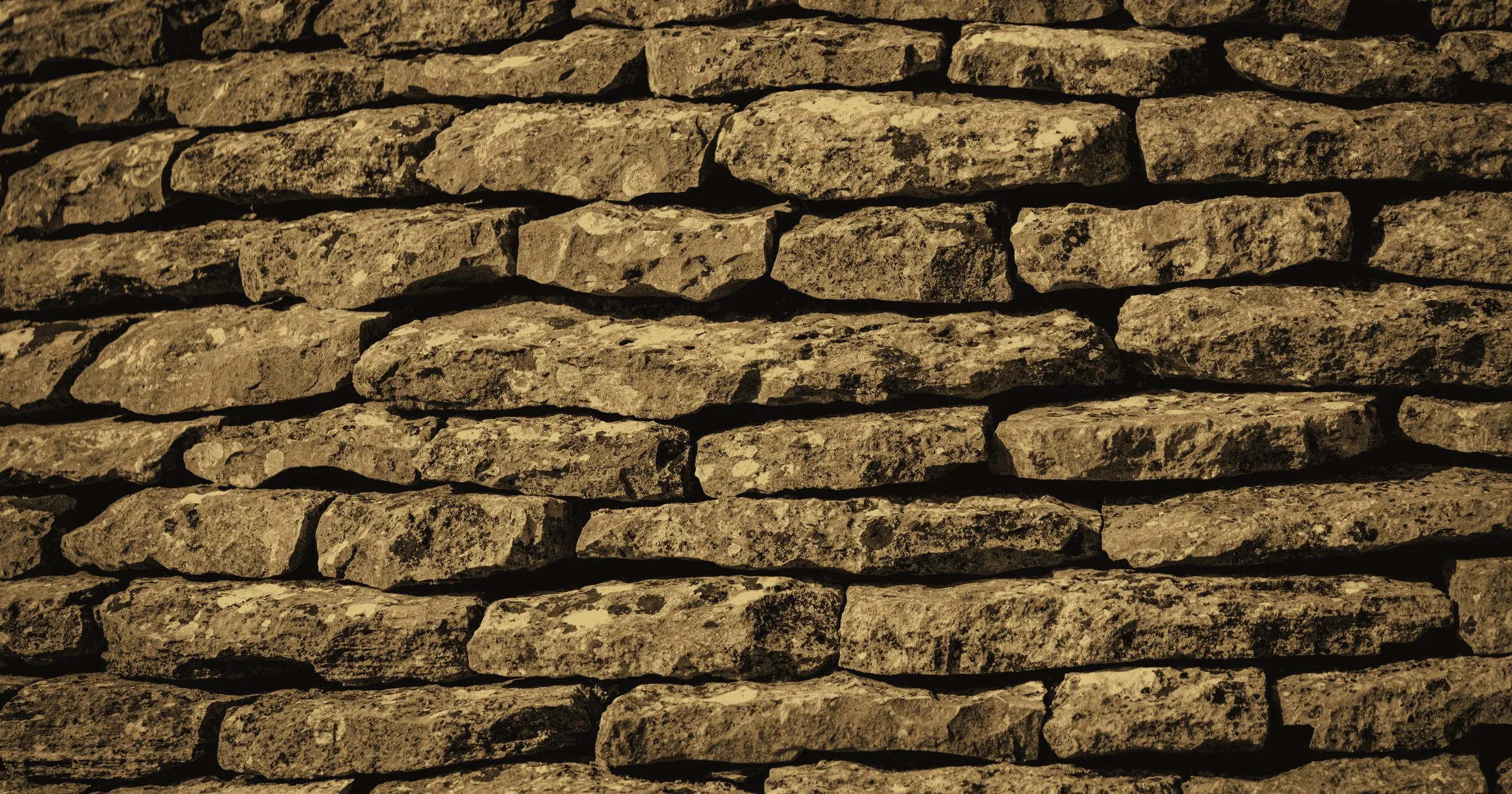
There is a ruined city in southern Africa built of dressed granite, without mortar, its outer wall eleven metres high and five metres thick at the base, enclosing an interior of passages and platforms and a conical tower whose purpose nobody has settled.
It covers about seven hundred hectares. At its height, in the fourteenth century, perhaps eighteen thousand people lived there.
When Europeans encountered Great Zimbabwe, they decided Africans could not have built it.
Phoenicians, then. Or the Queen of Sheba. Or Arabs, or some lost white race, or anyone at all, as long as it was not the people who lived there and whose descendants were standing beside the archaeologists saying, without any doubt at all, that their ancestors had built it.
The interesting part is what happened once the evidence was in.
By the 1930s the attribution was settled. Gertrude Caton-Thompson's excavation had been careful and conclusive, and everything found since, stratigraphy, carbon dating, the artefacts, the continuity of building technique with later Shona sites, has confirmed it. Great Zimbabwe was built by the ancestors of the Shona people.
And the government of colonial Rhodesia responded by suppressing it.
Not by arguing with it. By suppressing it. Archaeologists who published the correct attribution were censored, reassigned or dismissed. Official guidebooks were required to present the origin as an open question. This was not the eighteenth century; this was within living memory, in a state that considered itself a modern administration.
Why go to the trouble? Because the entire justification for white minority rule rested on the proposition that Africans were incapable of civilisation, and here were eleven metres of mortarless granite arguing otherwise.
We tend to imagine the erasure of African knowledge as a kind of accident: records not kept, oral traditions not written down, colonial scholars simply not looking very hard.
Great Zimbabwe shows what it actually was. When the evidence arrived anyway, the machinery of a state was used to hold it down, because a people with no history is much easier to dispossess than a people with one. The erasure was not a failure to find things. It was a sustained effort not to have found them.
The chain was intact and the register was falsified.
That is a harder thing to fix than a fire, because there is nothing to excavate. The work is not archaeological. It is simply the business of saying, repeatedly and against the weight of a very long silence, that the people who built the thing were the people who lived there.
They always said so. Nobody was listening, and for a hundred years that was the entire point.