
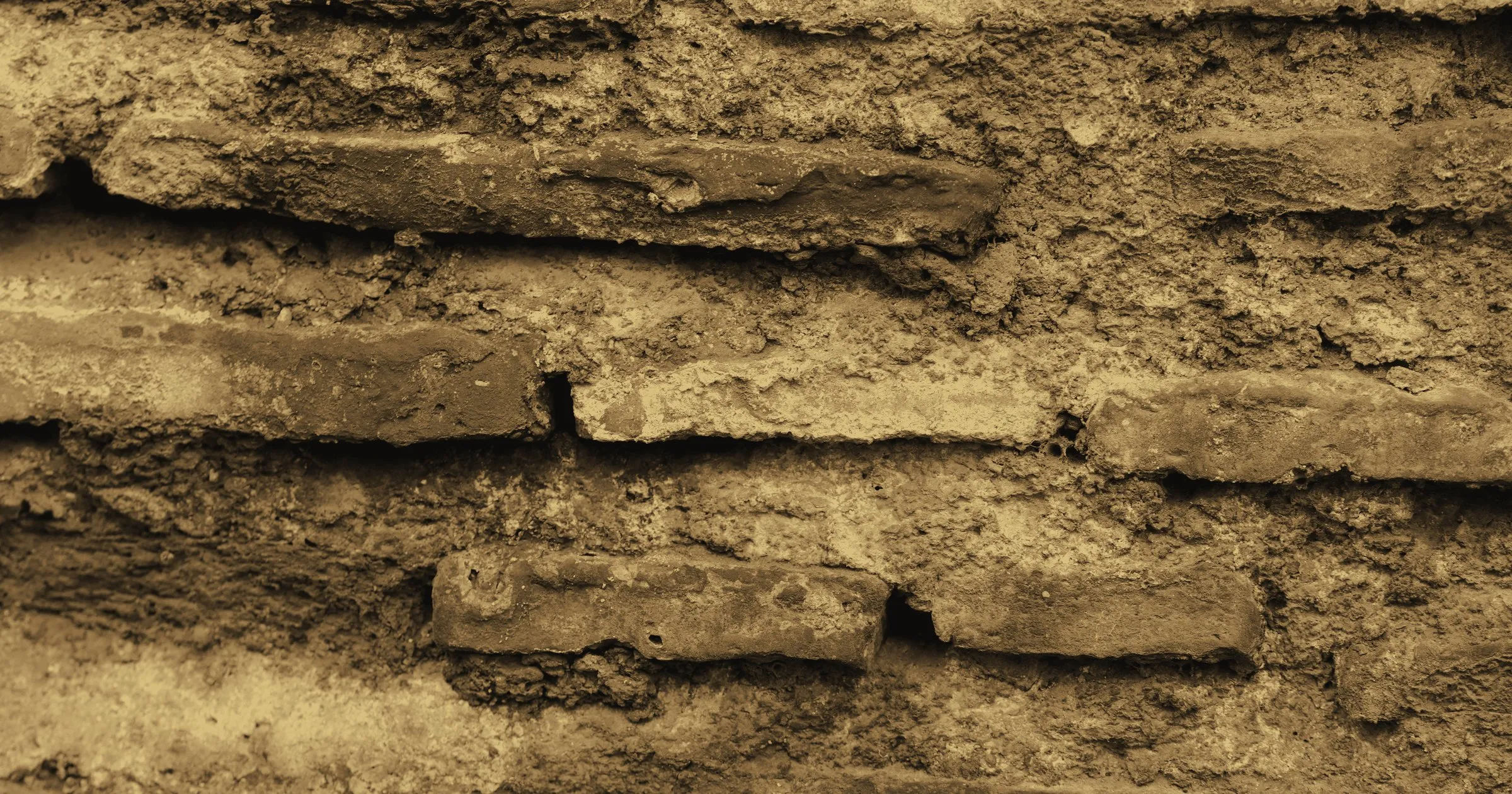
A child in Mohenjo-daro around 2500 BCE is growing up with better sanitation than most Europeans would have until the nineteenth century.
Her street is laid out on a grid. Her house has a bathing platform and a private drain, which feeds into a covered municipal sewer running under the road, with inspection points at intervals so it can be cleared. The bricks in her wall are the same dimensions as bricks in cities hundreds of kilometres away.
The Indus Valley civilisation was contemporary with Egypt and Mesopotamia and by some measures larger than both: at least five major cities, hundreds of smaller settlements, perhaps five million people.
And we cannot read a single word they wrote.
The script exists. Thousands of seal stones, tablets and potsherds carry it, and over four hundred distinct signs have been catalogued. It has never been deciphered and may never be.
We know what they built. We do not know what they thought.
We have no idea what they believed, what they argued about, how they governed, what they thought a person was for, whether they had poetry, or what they called themselves. Not one name of one Harappan has come down to us. Five million people and not a single name.
Our picture of every ancient civilisation is shaped by what happened to survive, and what survives is not what mattered. It is what was durable.
So a civilisation that wrote its accounts on clay and its literature on clay looks, four thousand years later, like a civilisation obsessed with accounts and literature. A civilisation that built superbly and wrote on something perishable looks like a civilisation of plumbers.
The Maya wrote thousands of books. Three and a fragment survive, because Diego de Landa burned the rest at Maní in 1562, and what we know of Maya astronomy comes substantially from those four objects. Had the fire been slightly more thorough we would today be describing the Maya as a people who built impressively and left no intellectual tradition, and we would be completely wrong, in exactly the way we are probably wrong about the Indus.
The silence is not evidence of absence. It is evidence of a broken link.
We have their drains. We have their weights, standardised to a tolerance that still impresses. We have a small stone seal with a unicorn on it and five characters nobody can read.
That is the whole surviving voice of five million people, and it is not their fault.